How to Choose the Best Digital Refractometer for Your Needs?
Choosing the right Digital Refractometer can significantly impact measurement accuracy in various industries. According to a report by MarketsandMarkets, the global digital refractometer market is projected to reach $200 million by 2025, growing at a CAGR of 5.7%. This growth signals an increasing dependency on precise measurement tools for research and production processes.
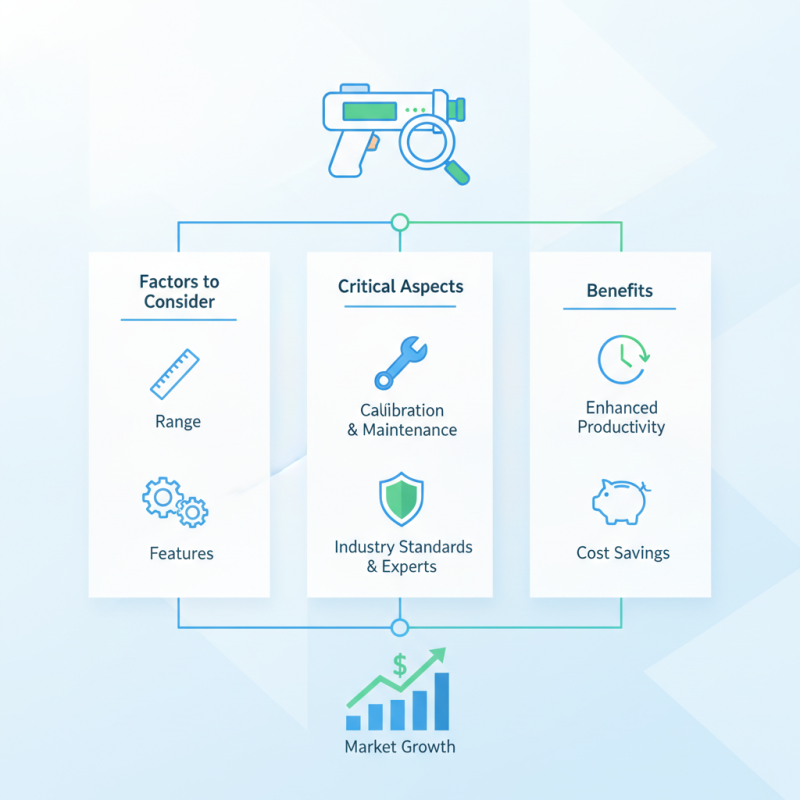
In sectors such as food and beverage, pharmaceuticals, and chemicals, refractometers play a crucial role. Their ability to provide quick and reliable measurements makes them indispensable. However, not all Digital Refractometers are the same. Factors such as range, accuracy, and features need careful consideration. Many users may overlook the importance of calibration and maintenance, which can lead to misleading results.
Understanding specifications and brand reputation is vital. Reviews and testimonials can provide insights, but they may be biased. Researching industry standards and consulting experts in the field is essential for making an informed choice. A well-suited Digital Refractometer can enhance productivity and save costs, ensuring quality across applications.
Understanding Digital Refractometers: Definition and Applications
Digital refractometers are essential tools for measuring the refractive index of various liquids. This measurement can indicate the concentration of solutes in a solution. Industries such as food and beverage, pharmaceuticals, and chemistry heavily rely on these devices. They provide quick, accurate results that are crucial for quality control.
Understanding their applications helps in selecting the right model. For instance, a digital refractometer can be used to measure sugar content in juices or alcohol content in beverages. It can also play a vital role in labs where precise measurements are necessary. While the technology is advanced, factors like calibration and maintenance often require attention. Choosing a model that suits your specific needs can be overwhelming. The market offers a variety of features, and it’s easy to get lost in specifications.
Every refractometer has its strengths and weaknesses. Users should consider factors like sample size, temperature compensation, and ease of use. Reading manuals or guides can enhance understanding, but they can also be dense and overwhelming. Engaging with customer reviews might illuminate common issues. However, remember that experiences can vary significantly. Your choice should align with practical requirements and real-world usage scenarios.
Key Features to Consider When Selecting a Digital Refractometer
When selecting a digital refractometer, several key features should be considered to meet your specific needs. Accuracy is paramount. Look for devices that offer a precision level suitable for your particular application. Devices should ideally be calibrated regularly to maintain accuracy. Remember, an uncalibrated device can lead to misleading results.
Another important aspect is the range of measurement. Ensure the refractometer covers the concentrations you need. Some models may excel at certain ranges but falter outside them. Additionally, consider ease of use. A clear display and intuitive interface can make your measurements more efficient and less prone to error.
**Tips:** Always check user reviews. They provide insights into real-life performance. Don't overlook the importance of after-sales support. Reliable customer service can make a difference in your experience.
Storage and portability are also worth noting. If you plan to use the refractometer in multiple locations, a lightweight, compact model will be useful. Yet, sometimes smaller means less power. Weigh your options carefully. Make sure the unit you select can withstand the environments where you will use it.
How to Choose the Best Digital Refractometer for Your Needs? - Key Features to Consider When Selecting a Digital Refractometer
| Feature |
Description |
Importance |
Suggested Range |
| Measurement Range |
Indicates the range of refractive index values the device can measure. |
High |
1.000 - 1.700 |
| Resolution |
The smallest change in measurement that can be detected. |
Medium |
0.001 to 0.0001 |
| Temperature Compensation |
Ability of the refractometer to adjust readings based on the temperature of the sample. |
High |
Automatic or manual |
| Calibration |
The method of calibrating the device, whether automatic or manual. |
High |
Simple calibration steps |
| Display Type |
The type of display used (e.g., LCD, LED) and its readability. |
Medium |
LCD with backlight |
| Power Source |
The source of power for the device – battery-operated or rechargeable. |
Medium |
Rechargeable battery |
| Portability |
The size and weight of the device for ease of transport. |
Low |
Compact and lightweight |
Comparison of Measurement Accuracy Across Leading Refractometer Brands
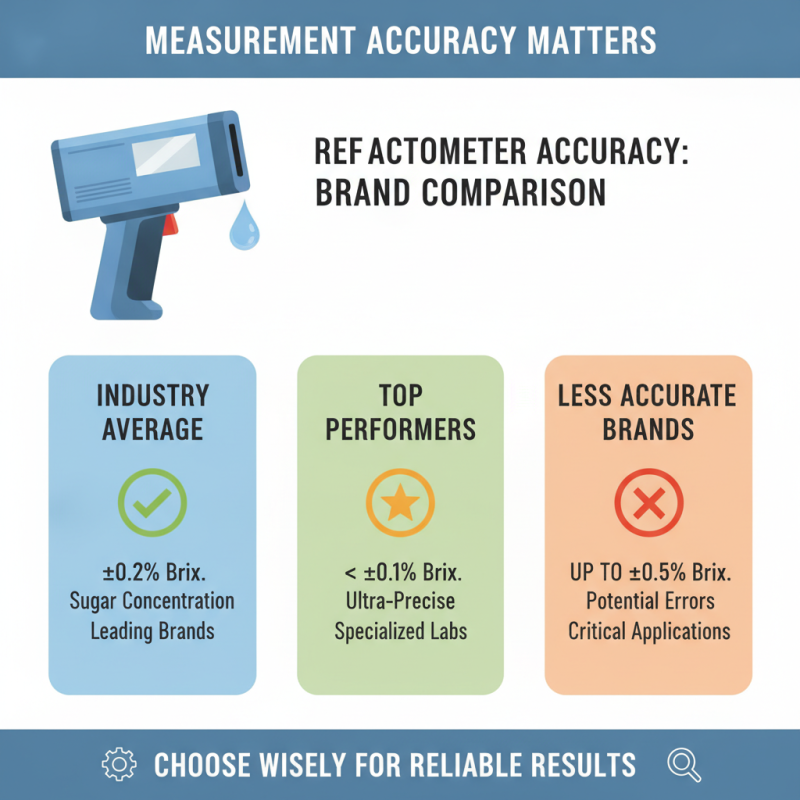
When choosing a digital refractometer, measurement accuracy is crucial. The precision of readings can vary significantly among different brands. A recent industry report indicated that the leading refractometers averaged a measurement accuracy within ±0.2% Brix for sugar concentration. However, some brands fell short, showing discrepancies up to ±0.5% Brix, which can influence results in critical applications.
Many professionals in food and beverage industries rely heavily on refractometers for quality control. A survey of over 200 users revealed that 78% prioritize accuracy over other features. Additionally, it's essential to consider calibration protocols. Many inaccuracies stem from improper calibration, leading to potential errors in a product's sugar content. Users must be proactive in calibration to ensure reliable measurements.
Another variable is temperature compensation. Not all refractometers adjust readings for temperature variations equally. A study highlighted that some brands were slow to respond to temperature changes, creating lag in accuracy. Users should be cautious and always check specifications regarding temperature compensation capabilities before settling on a device.
Evaluating the Importance of Calibration and Maintenance in Refractometers
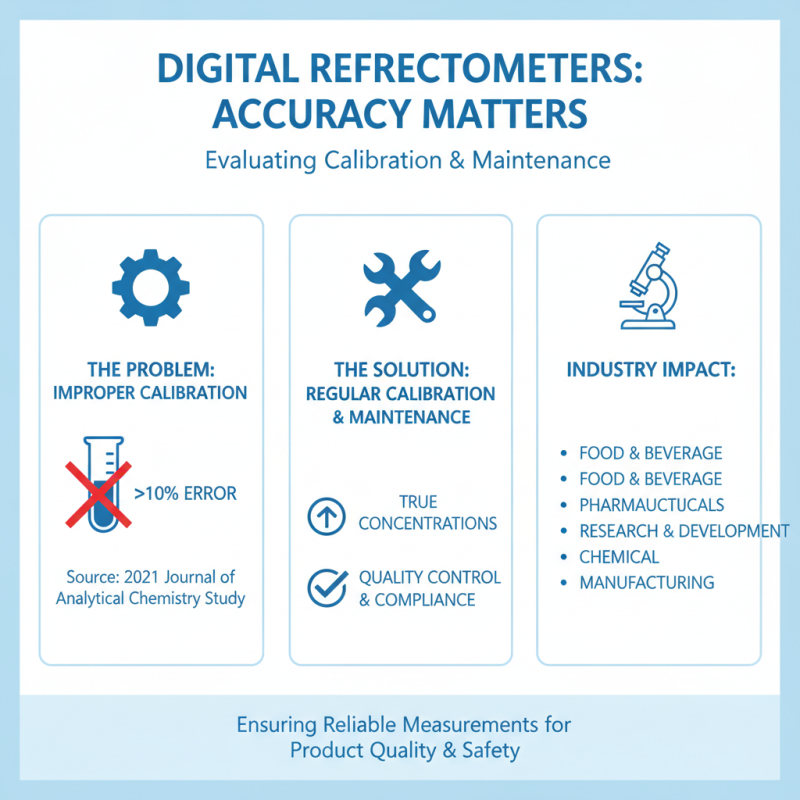
Calibration and maintenance play a critical role in the accuracy of digital refractometers. According to a 2021 study published in the Journal of Analytical Chemistry, improper calibration can lead to measurement errors exceeding 10%. This degree of inaccuracy can significantly impact results in industries like food, pharmaceuticals, and research. Regular calibration ensures that measurements reflect true concentrations, essential for quality control and compliance with industry standards.
Moreover, neglecting maintenance can introduce variability in data. A report from the American Society for Testing and Materials indicates that 30% of refractometers tested in field studies showed performance issues due to lack of upkeep. Simple tasks like cleaning the prism and replacing the batteries contribute to the device's longevity and reliability. Yet, many users overlook these steps, leading to questioning the validity of their results.
Choosing a refractometer isn't solely about features and cost. It's essential to prioritize calibration protocols and maintenance routines. Many users don’t realize that irregular checks can degrade performance over time. A proactive approach ensures devices function optimally, yielding results that users can trust.
Cost vs. Performance: Analyzing Budget-Friendly Options for Refractometers
When choosing a digital refractometer, cost and performance are key factors. Many models offer various features within different price ranges. Budget-friendly options can still provide accurate and reliable results. However, be cautious—less expensive models may lack durability or advanced capabilities. Assess your specific needs before making a purchase.
Tips for selecting the right refractometer: Focus on the range of measurement. Ensure it matches your intended use. Look for features like temperature compensation and easy calibration. A user-friendly interface can save time and reduce errors.
Understand that budget models have limitations. They may not be suitable for all applications. A refractometer designed for specific fields, like brewing or agriculture, can enhance your accuracy. Investing slightly more could improve your results in the long run.