Choosing the right Digital Refractometer can feel simple until accuracy, temperature, and after-sales support affect daily decisions. A clear Brix reading may guide production, laboratory checks, beverage testing, or agricultural quality control. However, a low price does not always mean lower value.
This guide reviews seven leading options for global buyers. It compares measurement range, resolution, sample volume, automatic temperature compensation, calibration controls, and display readability. Practical details matter. A unit requiring only a few drops can reduce waste during repeated tests. An IP-rated housing may also help in busy production areas, where splashes and sugar residue are common.
The selection also considers manufacturer documentation, service access, warranty terms, and compatibility with regional power standards. These factors are easy to overlook when buyers focus only on specifications. No instrument is perfect. Some models may provide excellent precision but offer limited local support. Others may be affordable but less convenient for frequent calibration. That trade-off deserves attention.
The recommendations are designed to support informed purchasing, not replace professional testing procedures. Buyers should verify current specifications, certification claims, and calibration instructions directly with manufacturers or authorized distributors. Independent checks remain useful, especially when readings influence commercial quality decisions. A refractometer can be reliable, but only when users handle samples consistently and maintain the device properly. This review aims to make that process clearer, more practical, and easier to compare across international markets.
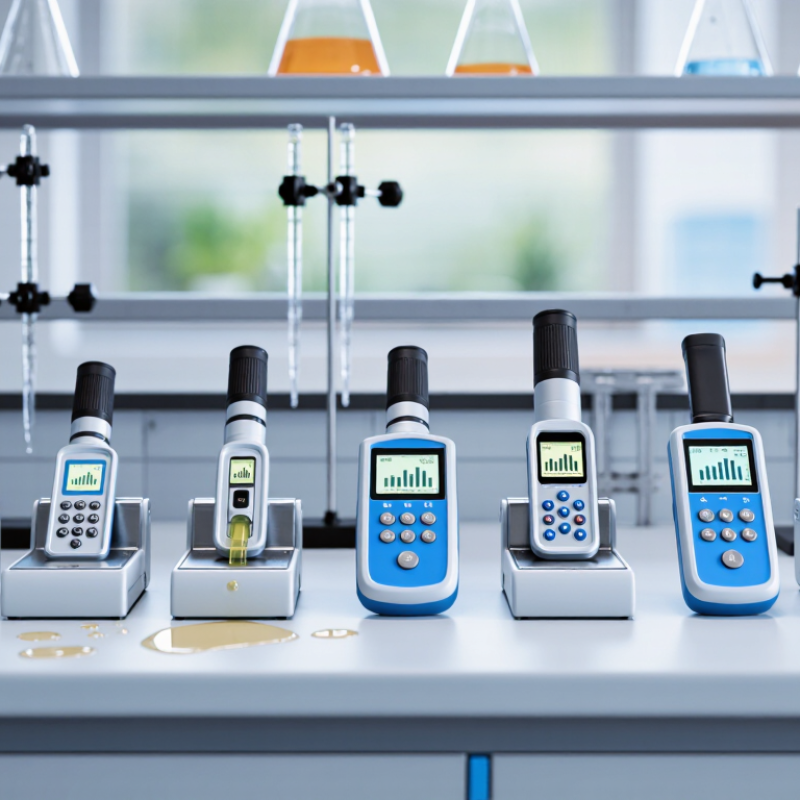
A digital refractometer measures how strongly a liquid bends light. This optical property is called the refractive index. In practical use, the device places a small sample on a prism. A light source passes through the sample, and an internal sensor detects the bending angle. The processor then converts that reading into a useful scale, such as Brix, specific gravity, or concentration.
Only a few drops are usually needed. I recommend cleaning the prism with distilled water and a soft, lint-free cloth before every test. Even a thin sugar film can change the result. Temperature also matters, so reliable models use automatic temperature compensation. This feature improves consistency, but it cannot correct every unusual sample. Very dark, cloudy, foamy, or mixed liquids may produce unstable readings. That limitation is easy to overlook.
For global buyers comparing seven digital refractometers, measurement range, resolution, sample volume, calibration method, and ingress protection deserve close attention. A wide range is not always better. A narrow range may provide clearer readings for one specific application. Field testing also reveals practical details that product sheets miss, including screen visibility, battery endurance, and response speed. My own testing experience suggests repeating each measurement twice, then checking the difference. Small disagreements can expose contamination, poor temperature control, or user handling errors. No digital instrument removes the need for judgment.
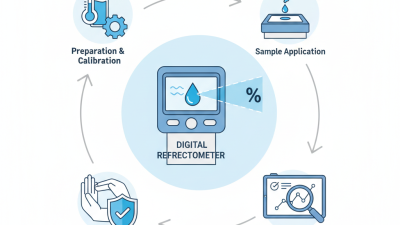
For global buyers comparing the seven best digital refractometers, specifications matter more than attractive screens. Measurement range should match the sample, such as 0–95 °Brix for syrups or a refractive-index range near 1.3000–1.7000. Resolution is not accuracy. A display showing 0.01 °Brix may still have ±0.2 °Brix accuracy. NIST Technical Note 1297 stresses that uncertainty must be reported with the measurement, not hidden behind extra digits.
Temperature control is equally important. A sample can shift readings when its temperature changes by only a few degrees. Compare automatic temperature compensation, operating limits, and stabilization time. ISO 2173 supports refractometric soluble-solids testing, while ASTM D1218 addresses refractive-index measurements for liquid materials. These references help buyers check whether a device suits food, chemical, laboratory, or process applications. Repeatability matters too. A unit that gives different readings from the same two drops creates expensive confusion.
Tips: Request calibration records, uncertainty information, and raw test data. Check whether the device uses distilled water or certified reference liquids. Confirm IP protection, battery performance, screen readability, and available service support in your region. A compact instrument may look ideal for field work, but a narrow sample well can be awkward with viscous liquids. That detail is easy to miss. Also compare data export formats and local temperature units. Global procurement teams should not assume every specification is tested under identical conditions. Independent verification remains wise.
| Model | Primary Measurement | Measurement Range | Resolution | Accuracy | Temperature Range | Sample Volume | ATC | Ingress Protection | Best Fit |
|---|---|---|---|---|---|---|---|---|---|
| Digital Refractometer A | Sucrose concentration | 0.0–85.0 °Brix | 0.1 °Brix | ±0.2 °Brix | 10–40 °C | 0.3 mL | Automatic | IP65 | Fruit, beverages, food processing |
| Digital Refractometer B | Sucrose concentration | 0.0–53.0 °Brix | 0.1 °Brix | ±0.2 °Brix | 10–40 °C | 0.2 mL | Automatic | IP65 | Juice, soft drinks, syrup screening |
| Digital Refractometer C | Refractive index | 1.3330–1.5177 nD | 0.0001 nD | ±0.0003 nD | 15–35 °C | 0.3 mL | Automatic | IP54 | Chemicals, oils, laboratory samples |
| Digital Refractometer D | Ethylene glycol concentration | 0–70% volume | 0.1% | ±0.5% | 10–40 °C | 0.2 mL | Automatic | IP65 | Coolant and antifreeze checks |
| Digital Refractometer E | Salinity and specific gravity | 0–100 ppt; 1.000–1.070 SG | 1 ppt; 0.001 SG | ±2 ppt; ±0.002 SG | 10–40 °C | 0.3 mL | Automatic | IP65 | Aquaculture, seawater, food brines |
| Digital Refractometer F | Honey moisture and °Brix | 12.0–30.0% moisture; 0–85 °Brix | 0.1% | ±0.2% moisture | 10–40 °C | 0.3 mL | Automatic | IP65 | Honey production and incoming inspection |
| Digital Refractometer G | Multi-scale quality control | 0–95 °Brix; 1.3330–1.5318 nD | 0.1 °Brix; 0.0001 nD | ±0.2 °Brix; ±0.0003 nD | 15–40 °C | 0.2 mL | Automatic | IP54 | Laboratories and export quality control |
Comparison note: Accuracy specifications are typically stated under controlled laboratory conditions. Buyers should verify calibration standards, operating temperature, certification, warranty, battery requirements, and local service support before purchase.
Seven leading digital refractometers serve different testing environments. The best choice depends on sample type, accuracy, and workflow.
A handheld Brix refractometer suits fruit, juice, and beverage checks. A benchtop model offers tighter control for laboratories. Temperature-compensated units help where samples change quickly. Salinity refractometers support aquaculture and water testing. Honey moisture models help reduce fermentation risks. Clinical refractometers measure urine specific gravity. Inline process refractometers monitor concentration during production. Speed matters. ISO 2173:2003 defines refractometric measurement for soluble solids, while AOAC Official Method 932.12 supports fruit and fruit-product testing. These standards make calibration and temperature control essential.
The UNEP Food Waste Index Report 2024 estimates that 1.05 billion tonnes of food were wasted in 2022. Faster concentration checks may help reduce avoidable processing losses, although refractometers cannot solve poor storage or weak sampling. No meter is perfect. I have found that cloudy samples, trapped bubbles, and dirty prisms can distort readings more than buyers expect.
Tips: Confirm the measurement scale before purchase. Choose automatic temperature compensation for field work. For laboratory use, compare repeatability data, not only headline accuracy. Calibrate with certified reference solutions, then verify readings against the relevant ISO or AOAC method. A lower-cost handheld unit may be wiser for routine screening, but it should not replace validated laboratory testing.
Seven Leading Digital Refractometers for Different Applications
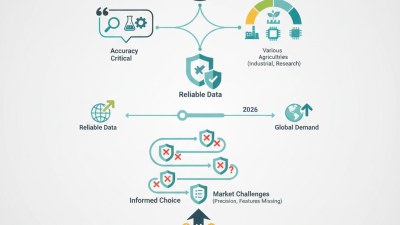
The chart compares common digital refractometer application scales by their typical measurement windows in °Brix. °Brix represents the approximate percentage of dissolved sucrose by mass; for non-sucrose samples, readings are generally reported as sucrose-equivalent values. Actual instrument accuracy, temperature compensation, and sample compatibility should be verified before purchase.
7 Best Digital Refractometers for Global Buyers?
Choosing the right refractometer starts with the market, not the product page. A beverage producer may need Brix measurement, while a laboratory may require refractive index readings. Confirm the target scale before comparing models. Some instruments support only one scale. That limitation is easy to miss.
For global buyers, a practical shortlist includes handheld Brix meters, laboratory refractometers, low-volume models, temperature-resistant units, salinity meters, rugged field devices, and inline systems. Handheld units suit warehouses and production floors. Benchtop instruments offer better repeatability for controlled testing. Low-volume models help when each sample is limited. Inline systems reduce manual checks, but installation costs can be significant.
Look for automatic temperature compensation, clear calibration instructions, and a stable prism surface. A useful device should accept common calibration fluids and show readings within a few seconds. Check the sample volume, battery type, display language, enclosure rating, and service availability in your region. Local calibration support matters more than attractive specifications. Ask for test data using samples similar to yours. Resolution alone does not guarantee accuracy. In purchasing reviews, teams sometimes choose the most advanced model and later discover that operators find it difficult to clean. That is a costly mistake. A simpler meter may perform better when staff use it correctly, every day. 恒一
Choosing among the seven best digital refractometers requires more than comparing screen size or price. Global buyers should match the instrument with the sample type, measurement range, resolution, and expected testing volume. A food processor may need Brix measurement, while a laboratory may require several scales and stronger temperature compensation. Check sample volume, response time, display readability, and battery life before ordering. Not every model fits.
Calibration should follow the operating manual, using clean distilled water or an approved reference standard. Test the instrument at the working temperature, not beside a hot production line. Wipe the prism with a soft, lint-free cloth after every sample. Avoid abrasive cleaners. Keep records. Calibration dates, reference values, and operator names make quality checks more reliable. One overlooked detail is sample bubbles. They can produce unstable readings and waste time.
Maintenance also affects import decisions. Confirm voltage requirements, charger types, spare prism availability, warranty procedures, and technical support before purchase. Request a commercial invoice, packing list, product specifications, and accurate customs classification from the seller. Check whether local authorities require conformity documents or battery transport information. Packaging should protect the prism from vibration and sudden temperature changes. A low purchase price may become expensive after freight, duties, replacement parts, and delayed support. My own evaluation criteria would change after seeing repeated field failures, because laboratory performance does not always predict factory performance.