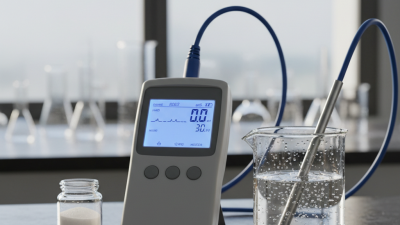
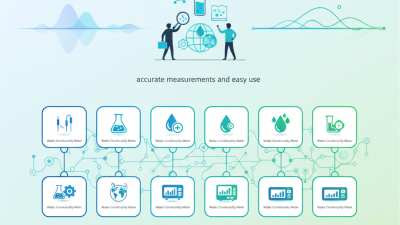
Water quality decisions increasingly depend on fast, defensible measurements at the source. The WHO and UNICEF Joint Monitoring Programme reported that 2.2 billion people lacked safely managed drinking water in 2022. That figure gives conductivity testing a practical role, especially where laboratories are distant or sampling conditions change quickly.
A Water Conductivity Meter does not identify every contaminant. It measures ionic conductance, usually reported in µS/cm or mS/cm, and helps users detect salinity, chemical carryover, dilution, or treatment changes. Small differences matter. The 2024 USGS National Water Information System continues to show conductivity as a widely used field parameter for interpreting stream and groundwater conditions. ISO 7888 and ASTM D1125 also provide established guidance for measuring water conductivity and resistivity.
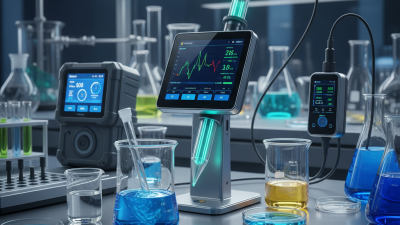
Global buyers will encounter several main types in 2026. Handheld meters suit field inspections and remote sampling. Benchtop models offer stronger stability for laboratories and quality-control rooms. Inline sensors support continuous monitoring in treatment plants, aquaculture systems, and industrial process lines. Portable multiparameter instruments combine conductivity with pH, dissolved oxygen, or temperature readings.
Not every sensor fits.
Selection should consider range, temperature compensation, cell constant, calibration standards, ingress protection, data logging, and service access. The World Bank’s water-sector reports repeatedly emphasize operational reliability, not only equipment purchase price. A ranking can still mislead if it ignores local maintenance skills, sample temperature, or fouling risk. Real-world performance is often less polished than a brochure suggests. This guide compares leading meter types through those practical limits, helping international buyers choose evidence-based equipment for their water, workflow, and regulatory environment.
A water conductivity meter measures how easily dissolved ions carry electric current. It does not identify each chemical. It reports overall ionic strength, usually in μS/cm or mS/cm. The sensor applies a small alternating voltage between electrodes. More mobile ions usually create higher conductance. Temperature matters greatly. Most meters therefore compensate readings to 25°C, following principles described in ISO 7888.
Common meters use contact probes, while inductive sensors suit dirtier or more corrosive water. Contact probes are practical for laboratories and field sampling. Inductive designs reduce electrode fouling, but they may need more sample volume. Calibration with certified conductivity standards is essential. Rinsing the cell with the sample also prevents dilution errors. Small details matter.
The World Health Organization’s 2022 Guidelines report that drinking water often tastes acceptable below 600 mg/L total dissolved solids, while taste may become poor above 1,000 mg/L. The U.S. Environmental Protection Agency lists 500 mg/L as a secondary TDS standard. Conductivity can estimate TDS, but the conversion factor changes with mineral composition. It is not universal.
A meter reading alone cannot confirm safety or compliance. Field users should record temperature, calibration status, sample location, and stabilization time. I have seen teams trust a stable number too quickly. That habit deserves reconsideration.
Water conductivity meters in 2026 serve different testing environments. The main types include pocket, handheld, benchtop, inline, and inductive meters. Pocket meters suit quick checks in drinking water tanks, aquariums, and small treatment systems. They are compact, but their narrow measurement range can limit industrial use. Handheld meters offer stronger protection, replaceable probes, and easier field sampling.
Benchtop meters provide higher stability for laboratories and quality-control rooms. They often support automatic temperature compensation, adjustable cell constants, and data recording. Inline meters monitor water continuously inside pipes or treatment lines. They reduce manual sampling, yet installation errors can distort readings. Inductive meters measure conductivity without direct electrode contact. This design handles dirty, corrosive, or high-concentration water better, although it may respond less precisely in very low-conductivity samples.
Choosing a meter should begin with the expected conductivity range, not the lowest price. Pure-water testing may require a sensitive probe and careful contamination control. Wastewater monitoring usually needs a wider range and a durable sensor body. Always calibrate with a suitable standard solution near the working range. Temperature compensation is useful, but it cannot correct a damaged probe. Field teams often rinse sensors too quickly, leaving chemical residue behind. That small mistake matters. A meter can show stable numbers while reporting the wrong water condition. Regular verification, clean sampling containers, and recorded maintenance improve confidence in every result.
2026 Top Water Conductivity Meter Types for Global Buyers
How to Compare Accuracy, Range, and Calibration Features
When comparing water conductivity meters, check accuracy before display resolution. A meter showing 0.01 µS/cm is not automatically accurate. In field testing, temperature changes often create larger errors than the screen suggests. Look for stated accuracy across the full operating range, not only at one laboratory point. A useful specification might separate measurement accuracy, temperature accuracy, and repeatability. These details reveal more than impressive decimal places.
Range should match the water you actually test. Pure water may require low-conductivity resolution, while industrial wastewater needs a much higher upper limit. Wide range sounds convenient, but one sensor rarely performs equally well everywhere. Cell constant selection matters. A low cell constant suits purified water, while a higher constant can handle conductive samples better. I once selected a broad-range meter that responded slowly in low-conductivity water. The range looked excellent on paper.
Calibration features deserve close attention. Choose meters supporting certified standards near your normal sample values. Automatic recognition reduces entry mistakes, but users should still verify the standard’s expiry date and temperature. Temperature compensation can use a fixed coefficient or automatic adjustment. Automatic is not always better. Natural water, cleaning solutions, and process water may require different coefficients. Rinse the probe thoroughly, remove trapped bubbles, and allow the reading to stabilize. Small handling errors remain easy to overlook. Calibration records, user access controls, and clear service instructions also support reliable testing across laboratories and field teams.
Choosing the right conductivity meter starts with the water, not the product category. Treated drinking water may require a low-range handheld meter with high resolution. Boiler water and industrial rinse systems often need wider ranges and stronger temperature compensation. A pocket meter suits quick checks, while a benchtop model supports controlled laboratory measurements. Inline meters fit continuous monitoring, but installation quality strongly affects their readings.
Check the cell constant, calibration method, and sensor material before comparing prices. A meter for purified water should detect small conductivity changes without excessive noise. Saline or wastewater applications need sensors that tolerate higher ionic loads and frequent cleaning. Automatic temperature compensation is useful, but it cannot correct poor sampling technique. Measure at a stable temperature when possible. Small details matter.
Global buyers should also examine IP protection, display readability, battery availability, data export, and service support. A device used near coastal plants may face humidity and corrosion. Remote sites may need replaceable batteries and simple calibration instructions. Verify whether the supplied calibration solution matches the instrument’s operating range. Check the certificate. A low price can be misleading when replacement sensors are difficult to source. There is no perfect meter. Even experienced operators can overlook probe fouling, air bubbles, or an unrepresentative sample. Selecting well means matching the meter to real water conditions, operator habits, and long-term maintenance capacity.
| Meter Type | Typical Conductivity Range | Common Cell Configuration | Temperature Compensation | Typical Accuracy | Best-Fit Applications | Main Advantages | Key Limitations |
|---|---|---|---|---|---|---|---|
| Portable Two-Electrode Meter | 0.1 µS/cm to 200 mS/cm | Two graphite, stainless-steel, or platinum-coated electrodes; interchangeable cell constants are often available. | Manual or automatic temperature compensation, commonly from 0 to 100°C depending on the probe. | Typically ±0.5% to ±1.0% of reading for routine field instruments; low-conductivity performance depends strongly on probe condition. | Drinking-water checks, irrigation water, aquaculture, environmental sampling, cooling-water checks, and general field testing. | Portable, relatively simple to operate, widely available, and suitable for routine measurements across many regions. | Electrode polarization and fouling can affect readings, especially in higher-conductivity or dirty samples. |
| Portable Four-Electrode Meter | 0.01 µS/cm to 1,000 mS/cm | Four-electrode conductivity cell designed to reduce polarization effects over a broad range. | Usually automatic; probe temperature limits vary by construction and cable assembly. | Typically ±0.5% of reading plus cell-dependent error when properly calibrated. | Variable-salinity water, wastewater, food and beverage samples, process-water surveys, and field work requiring a wider range. | Broad dynamic range, improved performance in concentrated samples, and less sensitivity to polarization than a basic two-electrode cell. | Usually costs more; accurate low-conductivity measurements still require clean handling and suitable calibration standards. |
| Benchtop Laboratory Conductivity Meter | 0.001 µS/cm to 1,000 mS/cm | High-precision two- or four-electrode cell with selectable cell constants. | Automatic temperature compensation is common; measurement temperature may be controlled with an external bath or integrated sensor. | Often approximately ±0.1% to ±0.5% of reading under controlled laboratory conditions. | Quality control, laboratory water testing, chemical analysis, formulation work, research, and compliance-oriented measurements. | High resolution, stable display, data logging, calibration reminders, and better repeatability than basic handheld meters. | Not designed for highly mobile work; results require careful temperature control, rinsing, and calibration practice. |
| Ultra-Pure Water Conductivity Meter | 0.055 µS/cm to 100 µS/cm at 25°C | Low-cell-constant sensor, commonly selected for purified, deionized, or laboratory water. | Automatic temperature compensation is normally included; temperature measurement accuracy is critical near the theoretical limit of pure water. | Typically specified by resolution and low-range accuracy; high-quality systems may achieve approximately ±0.1% to ±1.0% of reading within their calibrated range. | Pharmaceutical water systems, semiconductor rinse water, laboratory water, boiler feedwater, and high-purity process monitoring. | Optimized for very low conductivity and can identify ionic contamination quickly. | Readings are highly affected by carbon dioxide absorption, contamination, flow conditions, temperature, and air exposure. |
| Inductive or Toroidal Conductivity Meter | Typically 10 µS/cm to 2,000 mS/cm | Non-contact toroidal coils mounted in a polymer sensor body; no exposed metal electrodes contact the liquid. | Automatic temperature compensation is common, often suitable for industrial process temperatures within the sensor rating. | Typically ±0.5% to ±1.0% of reading after installation and application-specific calibration. | Dirty wastewater, corrosive chemicals, high-salinity streams, pickling solutions, water treatment, and continuous industrial process control. | Resists coating and corrosion, requires little electrode maintenance, and is suitable for harsh or heavily contaminated liquids. | Generally unsuitable for ultra-pure water; requires adequate pipe or vessel diameter and can be influenced by installation geometry. |
| Inline Contact Conductivity Transmitter | 0.01 µS/cm to 2,000 mS/cm | Fixed two- or four-electrode sensor installed in a flow cell, pipe, immersion assembly, or retractable fitting. | Usually automatic, with sensor temperature limits determined by materials, seals, and process connection. | Commonly ±0.5% to ±1.0% of reading for the complete measurement loop, subject to installation and calibration. | Continuous monitoring of drinking-water treatment, reverse osmosis systems, cooling towers, boilers, rinse lines, and industrial utilities. | Real-time measurement, alarm and control outputs, reduced manual sampling, and easy integration with automation systems. | Installation quality is critical; bubbles, low flow, scaling, grounding, and sensor fouling can produce unstable readings. |
| Conductivity Pen Tester | Approximately 10 µS/cm to 20 mS/cm | Compact fixed two-electrode probe integrated into a handheld pen-style housing. | Usually automatic over a limited temperature range; temperature compensation may be basic. | Often approximately ±1% to ±2% of full scale or reading, depending on the model and range. | Fast screening of hydroponic nutrient solution, aquaculture water, irrigation water, drinking-water trends, and educational testing. | Low purchase cost, lightweight design, fast measurements, and minimal training requirements. | Limited range and durability; generally less suitable for trace-level, regulatory, laboratory, or harsh industrial measurements. |
| Salinity and TDS Combination Meter | Conductivity commonly 0.1 µS/cm to 200 mS/cm | Two- or four-electrode cell with calculated salinity and total dissolved solids functions. | Automatic temperature compensation is standard on most modern instruments. | Conductivity accuracy commonly ranges from ±0.5% to ±1.0%; salinity and TDS values are calculated estimates. | Aquaculture, marine water, agriculture, hydroponics, food processing, and field surveys where conductivity and estimated dissolved solids are both useful. | Provides multiple practical parameters from one measurement and simplifies routine field decisions. | TDS depends on the selected conversion factor; it is not a direct gravimetric measurement of all dissolved substances. |
| Multiparameter Water Quality Meter | Conductivity commonly 0.01 µS/cm to 200 mS/cm | Modular probe combining conductivity with temperature, pH, dissolved oxygen, salinity, or depth sensors. | Automatic compensation is normally available; compensation interactions depend on the parameter combination. | Conductivity performance is commonly about ±0.5% to ±1.0% of reading, while each additional parameter has its own specification. | Rivers, lakes, groundwater, aquaculture facilities, wastewater surveys, environmental studies, and compliance sampling. | Collects several water-quality parameters at the same location, often with GPS and digital data logging. | Higher cost and maintenance burden; probe replacement, cross-sensor interference, and battery management must be considered. |
| High-Temperature or High-Pressure Process Meter | Application-dependent; commonly 0.1 µS/cm to 2,000 mS/cm | Industrial contact or inductive sensor with rated process fittings, seals, and materials. | Automatic compensation is normally used within the specified process-temperature range. | Commonly ±0.5% to ±1.5% of reading for the complete installed system, depending on process conditions. | Boiler systems, power generation, chemical processing, hot water loops, CIP systems, and pressurized industrial lines. | Designed for continuous service under demanding temperature, pressure, and chemical conditions. | Higher installation cost; sensor materials, pressure rating, grounding, and safety requirements must match the process. |
Global buyers should evaluate water conductivity meters through standards, maintenance needs, and actual working conditions. A meter suitable for clean laboratory samples may struggle in wastewater, seawater, or high-temperature process lines. Select the correct conductivity range, cell constant, temperature compensation, and protection rating. ISO 7888 and ASTM D1125 provide useful measurement references, but local procedures may differ. Confirm the required method before purchasing.
Tips: Request calibration certificates with traceable references. Check whether the supplier explains calibration frequency and replacement parts. Rinse the probe with suitable deionized water after use. Never store a sensor dry unless its instructions allow it. Record readings, temperature, sample location, and operator details. Small records prevent large disputes.
Maintenance affects reliability more than the display resolution alone. Inspect the probe for deposits, trapped bubbles, cracked cables, or unstable readings. Use certified conductivity standards within the meter’s recommended range. Field teams should carry spare solutions and a simple verification log. I have seen accurate instruments produce poor data because operators skipped temperature checks. That mistake is easy to repeat. Purchasing teams should also review training, warranty limits, software compatibility, and service availability across borders. A low purchase price may hide costly downtime, though even a detailed checklist cannot predict every field problem.