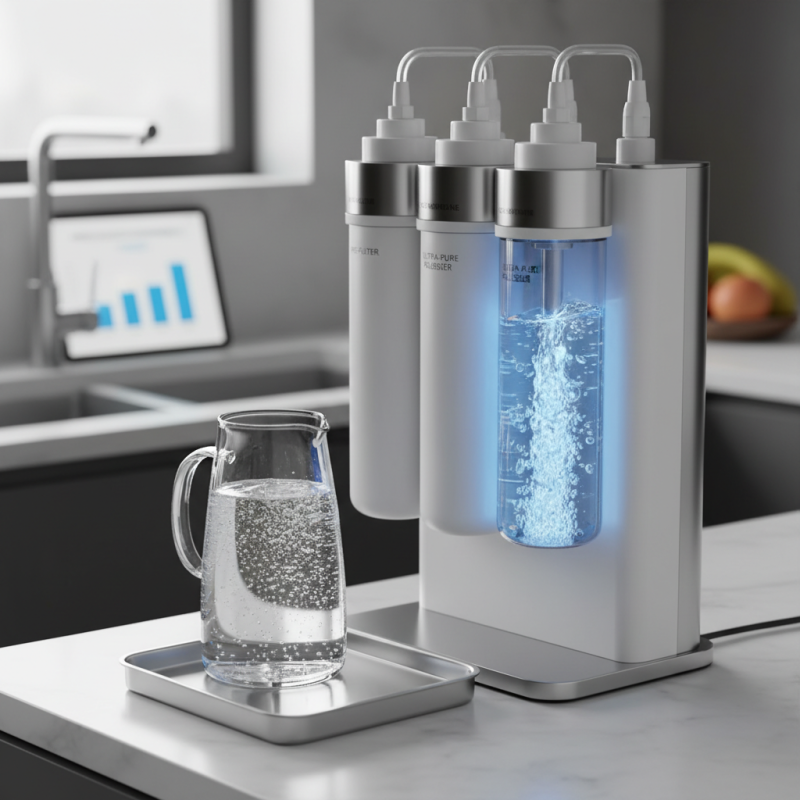
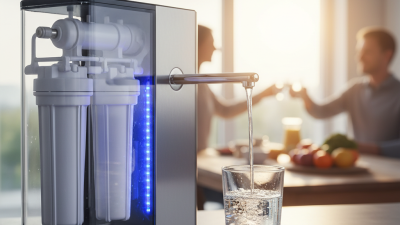
What is Ultra Pure Water Purifier and How Does It Work?
In an age where water quality is vital, an Ultra Pure Water Purifier has become essential. According to the Water Quality Association, over 50% of households are concerned about contaminants in their drinking water. This highlights the growing demand for effective purification solutions.
Ultra Pure Water Purifiers utilize advanced technologies to eliminate impurities. They can remove contaminants like heavy metals and microorganisms. Studies reveal that up to 99.9% of harmful substances can be filtered out. These purifiers not only enhance water taste but also ensure its safety for consumption.
While Ultra Pure Water Purifiers offer significant benefits, they are not without limitations. Some systems require regular maintenance and can be costly. However, investing in high-quality purification can lead to long-term health benefits. Ensuring that you choose a reliable system is crucial for optimal performance and safety.
Definition of Ultra Pure Water Purifier and Its Importance
Ultra Pure Water Purifier is crucial for various industries. It ensures the highest water quality needed for sensitive applications. Ultra-pure water (UPW) meets stringent standards, often with conductivity levels below 0.055 µS/cm. This purity is vital in semiconductor manufacturing and pharmaceutical production, where even tiny impurities can lead to defects and loss.
The process of purifying water involves multiple stages, including reverse osmosis, deionization, and filtration. Each stage targets specific contaminants. For instance, reverse osmosis effectively removes dissolved salts. A 2022 report highlighted that UPW systems reduce hydrocarbon levels by up to 99.9%. This is essential in maintaining equipment efficiency and product quality.
Tip: Regular maintenance of your water purification system can enhance its efficiency. Check your filters and membranes often. Failure to do so can lead to unexpected disruptions in water quality. Investigate each aspect cautiously.
Despite advancements, achieving complete purity remains challenging. For example, certain organic compounds can evade detection. Over-reliance on a single technology also poses risks. Diverse purification methods may yield better results. Monitor your systems regularly. This proactive approach prevents costly delays.
Key Components and Technologies Used in Ultra Pure Water Purifiers
Ultra Pure Water Purifiers employ advanced technologies to ensure water purity for critical applications. Key components typically include
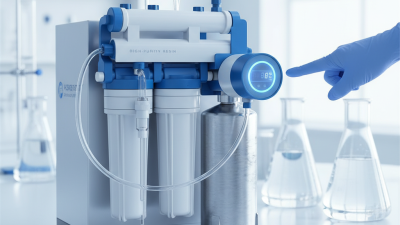
reverse osmosis (RO) membranes, deionization (DI) units, and ultraviolet (UV) light sterilization.
According to a report by Global Water Purification Market, the RO segment alone is projected to grow by 10% annually due to its effectiveness in removing impurities.
The RO membranes are crucial for filtering out particles as small as 0.0001 microns. This means they can eliminate bacteria, viruses, and even dissolved salts. However, the reliance on these membranes raises questions about their lifespan and maintenance.
Regular cleaning and replacement are necessary, which can lead to operational downtimes and additional costs.
Deionization units further enhance water quality by removing ionized salts. This process is essential for industries like pharmaceuticals and electronics, where water quality specifications are stringent.
However, the effectiveness of deionization may be impaired if the incoming water contains heavy metals or other contaminants.
This complexity underscores the importance of periodic testing and system updates to ensure reliable performance.
The Process of Purification in Ultra Pure Water Systems
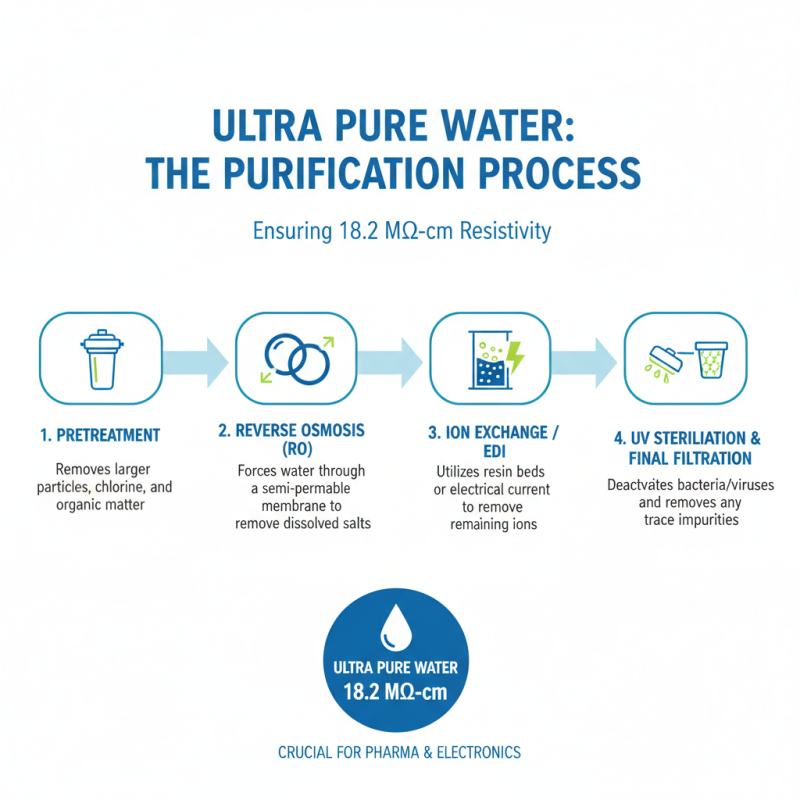
Ultra pure water systems employ advanced purification processes to ensure water meets stringent quality standards. These systems are crucial in industries such as pharmaceuticals and electronics, where any impurities can lead to significant product failures or health risks. Purity levels of 18.2 megohm-cm resistivity are often targeted in ultra pure water applications. This ensures water is basically devoid of dissolved salts and organic compounds.
The purification process typically includes several stages. Initially, reverse osmosis filters out large contaminants. This is followed by deionization, which uses ion-exchange resins to remove dissolved ions. Research indicates that deionization can remove up to 99.9% of ionic impurities. Subsequently, a final filtration stage often employs UV light to eliminate any remaining microorganisms. The entire process requires meticulous monitoring. Even minor deviations can compromise water quality.
Despite the advanced technology, challenges remain. Maintaining the integrity of purification systems is an ongoing concern. Regular maintenance and calibration are needed to prevent contamination risks. Industrial reports show that about 50% of water treatment systems face operational issues, often due to neglect. This highlights the importance of routine checks in achieving ultra pure water standards. Experts recommend frequent evaluations to ensure compliance with safety and quality benchmarks.
Applications of Ultra Pure Water in Various Industries
Ultra Pure Water (UPW) is essential in various industries. Its applications span
electronics, pharmaceuticals, and biotechnology. In the semiconductor
industry, ultra-pure water removes impurities that can affect chip production. Even tiny contaminants can cause
significant failures in advanced electronics. Hence, the quality of water is paramount.
In pharmaceuticals, UPW is crucial for drug formulation and cleaning
processes. Meeting stringent regulations demands high purity levels. Any flaw in water quality can lead to costly batch failures.
Facilities must ensure compliance with safety standards. The challenge lies in maintaining the purity during
storage and distribution.
Biotechnology also relies on ultra-pure water for research and production. Cell cultures require flawless water to thrive.
Contaminated water can compromise results and lead to erroneous findings. While technology provides solutions, human
oversight is needed. Reflection on purification processes is essential to recognize potential gaps. Each application
highlights the need for diligence and quality control.
Maintenance and Performance Monitoring of Ultra Pure Water Purifiers
Maintaining an ultra-pure water purifier is essential for its performance. Regular monitoring ensures that the purification process remains effective. Test water quality periodically. Check for contaminants to confirm the purifier's efficiency. If the readings are off, immediate action is necessary.
Filters need to be replaced based on usage. Ignoring this can lead to reduced purification capabilities. Keeping a replacement schedule is important. Some users forget to replace filters, leading to compromised water quality. A thorough understanding of the purifier's manual can prevent these issues.
Performance monitoring can also include cleaning the system. Check for scale buildup regularly. Sometimes, users overlook this step. Not cleaning can lead to clogs and inefficiencies. If the water flow decreases, it may indicate a need for maintenance. Regular checks will help maintain optimal performance.