Leave Your Message

Top 5 Tips for Using a Total Dissolved Solids Meter?

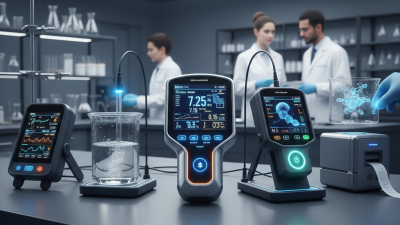
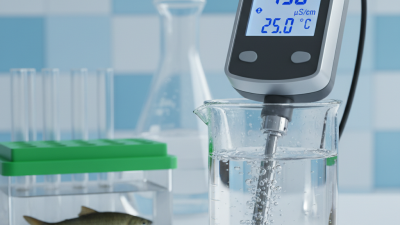
In the world of water quality testing, the Total Dissolved Solids Meter plays a crucial role. This simple yet effective tool helps measure the concentration of dissolved solids in water. Understanding how to use it correctly can significantly impact your water testing results.

Many users make common mistakes when handling the Total Dissolved Solids Meter. For instance, improper calibration can lead to inaccurate readings. It's essential to ensure that the meter is calibrated according to the manufacturer’s instructions. This step is often overlooked but critical for reliable data.

Testing water quality is not just a technical task; it requires attention and care. Using the Total Dissolved Solids Meter effectively can enhance your understanding of water purity. With the right approach, you can gain valuable insights into your water quality. By following certain tips, you can avoid pitfalls and improve your testing accuracy.
Top 5 Tips for Using a Total Dissolved Solids Meter?

Understanding Total Dissolved Solids (TDS) and Its Importance in Water Quality

Top 5 Tips for Using a Total Dissolved Solids Meter?

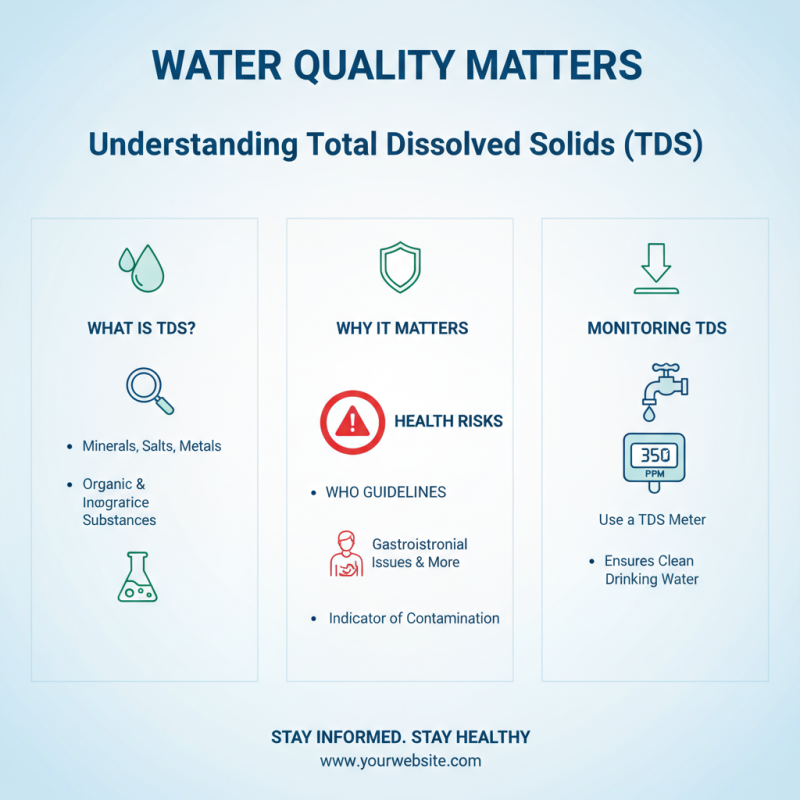
Total Dissolved Solids (TDS) refer to all the organic and inorganic substances dissolved in water. This includes minerals, salts, and metals. Monitoring TDS levels is crucial for various reasons. For instance, according to the World Health Organization (WHO), high TDS levels can indicate water quality issues that may affect human health. Ingesting contaminated water can lead to serious health problems, including gastrointestinal issues and other long-term conditions.

The importance of TDS becomes evident in industries such as agriculture and aquaculture. A study by the Environmental Protection Agency (EPA) highlights that optimal TDS levels support plant growth and aquatic life. However, managing TDS is not without challenges. Different sources of water can lead to variable TDS readings, complicating accurate assessments. Regular testing is needed to ensure compliance with quality standards set by health organizations.

Understanding the significance of TDS is essential for water quality management. High TDS can correlate with saline water, which may adversely affect crop yield. It's not always easy to maintain ideal levels. This requires ongoing monitoring and adjustments based on environmental conditions and usage. In this sense, awareness and proactive measures are critical. By regularly assessing TDS levels, both consumers and industries can better manage water resources.
Choosing the Right TDS Meter: Key Features and Specifications to Consider

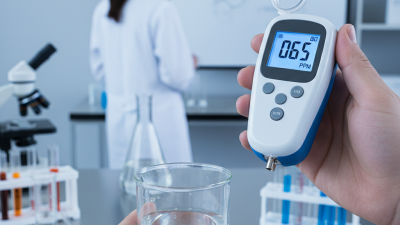
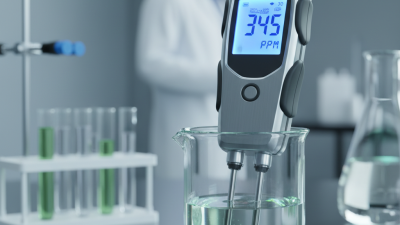
When selecting a Total Dissolved Solids (TDS) meter, focus on key features that enhance usability and accuracy. Look for meters with high accuracy rates. Industry reports show that meters with ±2% accuracy significantly reduce the margin of error in water quality testing. Consider range, too. Meters that measure from 0 to 5000 ppm offer versatility, catering to diverse applications—from aquariums to drinking water.

It's crucial to choose a model with user-friendly features. A display that shows both TDS levels and temperature can help in understanding variations in readings. Additionally, opt for meters with automatic calibration capabilities. This feature ensures consistent reliability, accommodating changes in measurement conditions. Some meters struggle when recalibrating, resulting in uncertainty during use.

Battery life is another important factor. A model lasting up to 200 hours without replacement increases convenience, especially in field studies. Portable options are preferable for ease of use. However, not all portable meters are robust. Some evaluations indicate that lightweight designs may not withstand rigorous conditions. Make sure to weigh portability against durability for accurate, reliable measurements.

Top 5 Tips for Using a Total Dissolved Solids Meter

Tip Description Key Features Specifications
1. Calibration Calibrate your TDS meter before use to ensure accurate readings. Auto Calibration, Calibration Solutions Calibration Range: 0-1000 ppm
2. Proper Use Immerse the probe adequately in the liquid being tested. Waterproof Design, Ergonomic Grip Probe Length: 100 mm
3. Temperature Compensation Ensure the meter has automatic temperature compensation for accuracy. ATC Technology, Wide Temperature Range Operating Temp: 0-50°C
4. Battery Life Check the battery life and use rechargeable batteries for convenience. Long-lasting Battery, Low Battery Indicator Battery Type: AAA, Life: 100 hours
5. Regular Maintenance Clean the probe regularly to maintain accuracy and prolong its lifespan. User Manual, Cleaning Kit Maintenance Interval: Every 2 months

Calibration Techniques for Accurate TDS Measurements in Various Settings

Top 5 Tips for Using a Total Dissolved Solids Meter?

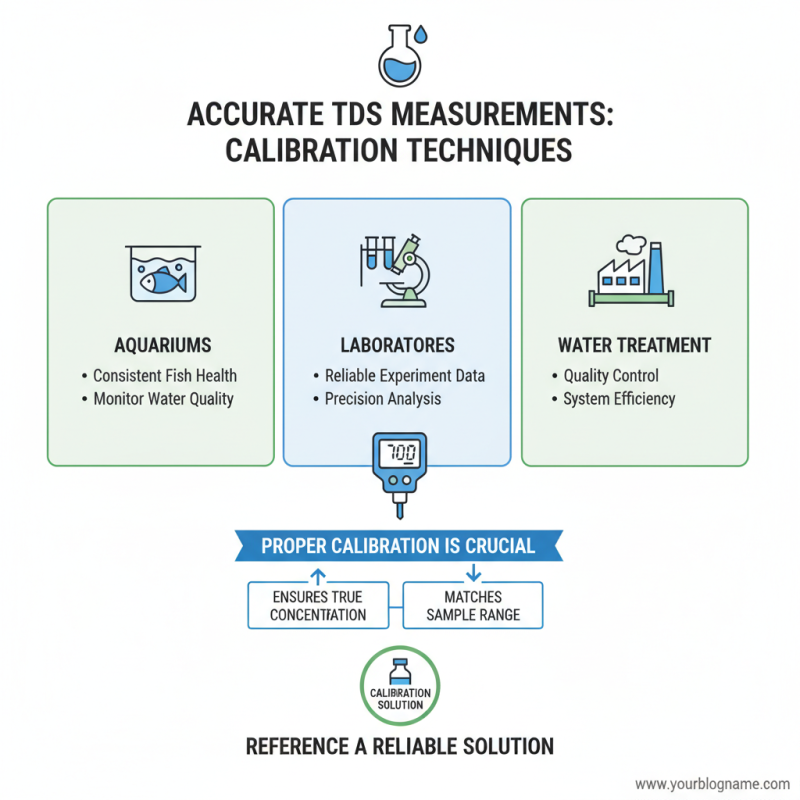
When using a Total Dissolved Solids (TDS) meter, proper calibration is crucial for accurate readings. In various settings, such as aquariums, laboratories, or water treatment facilities, maintaining accuracy can be challenging. Calibration ensures that your readings reflect the true concentration of dissolved solids. It's wise to reference a reliable calibration solution that matches the expected range of your samples.

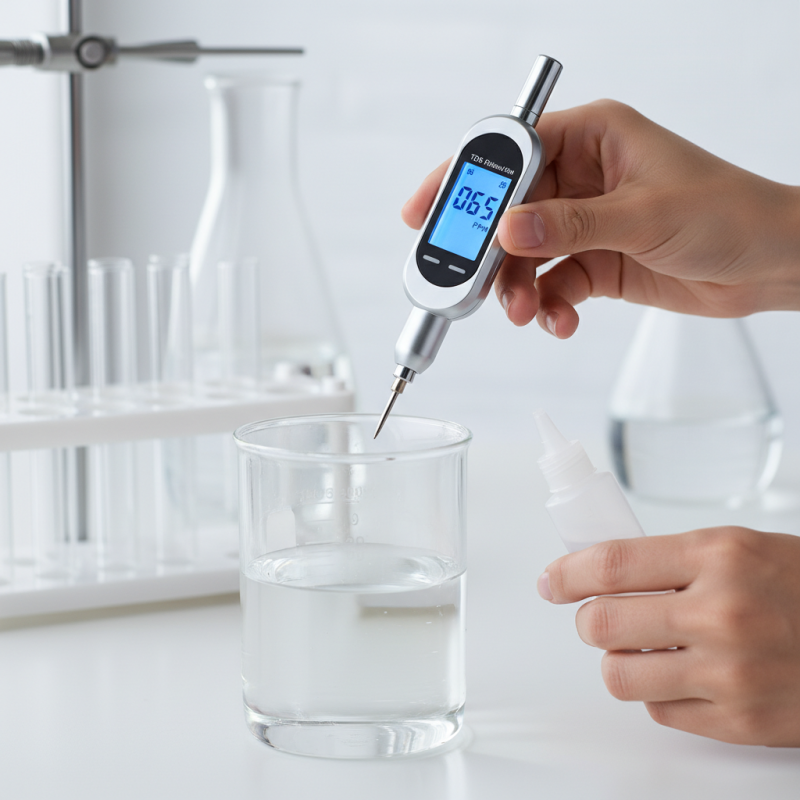
Regularly calibrating your TDS meter can prevent discrepancies. A simple procedure often involves immersing the probe in the calibration solution. This step can be overlooked, but it significantly affects precision. If a meter is not calibrated, results may mislead you. Sometimes, users may skip this step when time is short. However, this can lead to errors in critical measurements.

Environmental factors can also influence TDS readings. For instance, temperature variations might affect the probe's performance. It's important to take note of this during calibration. Regular checks, once a week or more, can help mitigate inaccuracies. Relying solely on historical data is risky as conditions change. Calibration should be viewed as a routine task, not just an option. Balancing precision and practicality in your calibration techniques leads to reliable measurements in your applications.

Interpreting TDS Readings: What Do the Numbers Really Mean for Your Water?

Understanding Total Dissolved Solids (TDS) readings is essential for assessing water quality. TDS meters measure the concentration of dissolved substances, which can include salts, minerals, and organic matter. An accepted safe limit for drinking water is typically below 500 mg/L. Higher levels may indicate potential issues. For example, TDS levels above 1000 mg/L are often linked to health risks.

Interpreting TDS numbers can be tricky. A reading of 200 mg/L might seem acceptable. However, the specific components could pose risks. For instance, high sodium levels could affect those with high blood pressure. A comprehensive analysis is crucial. Relying solely on TDS values can be misleading. Water may have other contaminants that impact safety and taste.

Regular monitoring using a TDS meter can help track changes over time. Observing trends can reveal sources of contamination. Changes in TDS levels may indicate issues such as pollution. Water management professionals often stress the importance of understanding these readings fully. It's vital to consider the source of the water and its intended use. Not every reading tells the whole story, and more extensive testing provides deeper insights.

Regular Maintenance Practices to Extend the Lifespan of Your TDS Meter

Regular maintenance is essential for extending the lifespan of your total dissolved solids (TDS) meter. Without proper care, the device may deliver inaccurate readings. Begin by cleaning the probe after each use. Use distilled water and a soft cloth to avoid damaging sensitive components. This simple step can prevent contamination and buildup of residue.

Calibration is also crucial. Check your meter’s accuracy before each major use. Professional-grade meters usually require regular calibration with standard solutions. Make sure to follow the manufacturer’s guidelines for this process. Failure to calibrate can lead to unreliable measurements.

Store the TDS meter in a protective case. Avoid exposing it to extreme temperatures and humidity. These conditions can degrade the meter's performance over time. It’s important to regularly inspect the batteries as well. Replace them promptly to ensure consistent operation. Taking these steps can greatly enhance the reliability and longevity of your TDS meter.

Top 5 Tips for Using a Total Dissolved Solids Meter

This chart illustrates the Total Dissolved Solids (TDS) levels in different water samples, highlighting the importance of regular maintenance and monitoring to ensure accurate readings and equipment longevity.