Top 10 Water Conductivity Meters for Accurate Measurements?
Water conductivity is a crucial parameter in various industries, including agriculture, aquaculture, and environmental monitoring. The measurement of conductivity provides insights into water quality, enabling efficient management and conservation practices. According to a 2022 report by the American Water Works Association, accurate measurements of water conductivity can improve water treatment processes and minimize costs by 15% in some cases.
A reliable Water Conductivity Meter plays a significant role in these assessments. It helps in quantifying the ionic content of water, which directly affects its purity and usability. Researchers emphasize that using high-quality meters can increase measurement reliability, thus fostering better decision-making. The 2021 World Health Organization guidelines suggest that regular monitoring and precise measurements are essential to ensure safe drinking water.
However, not all conductivity meters are created equal. Many options in the market vary in accuracy and usability. It’s essential to understand the features that distinguish a top-tier Water Conductivity Meter from an inferior one. Reflecting on the recent user reviews, it’s clear that some models fall short on functionality. Identifying these flaws is key to making informed choices and enhancing water quality management systems.
Understanding Water Conductivity and Its Importance in Measurements
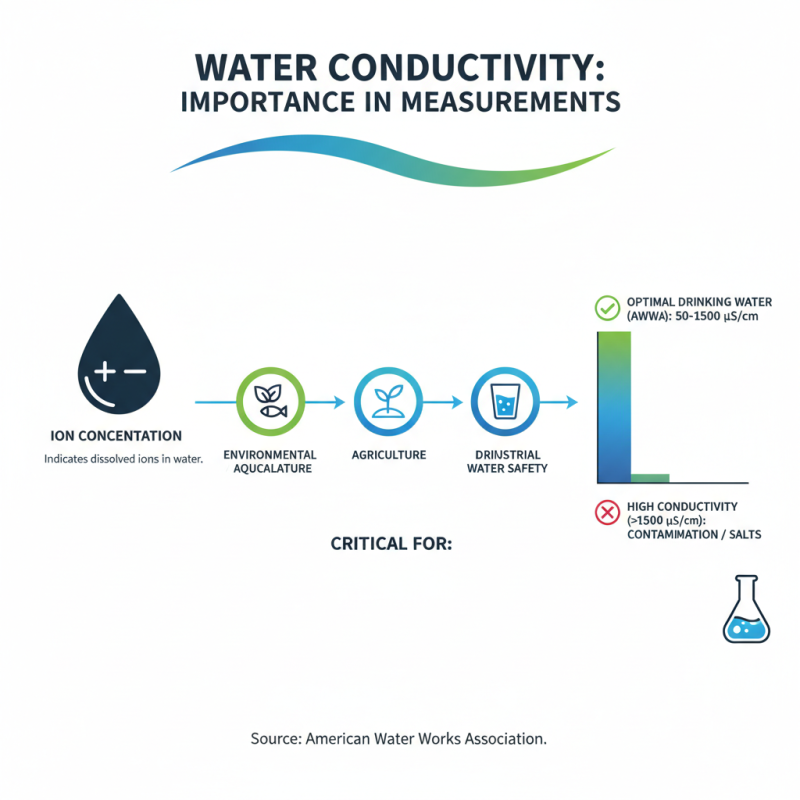
Water conductivity is a critical measurement in various industries. It indicates the concentration of ions in water, which affects its quality. Understanding water conductivity is essential for environmental monitoring, agriculture, aquaculture, and ensuring safe drinking water. The American Water Works Association highlights that optimal conductivity levels range between 50 to 1500 µS/cm for drinking water. Values above this range can indicate contamination or a high presence of salts.
In agricultural practices, water conductivity affects plant growth and soil health. A study from the International Journal of Agriculture shows that high conductivity can harm sensitive crops. Interestingly, conductivity can vary significantly depending on the source of water. For example, groundwater often has higher conductivity than surface water due to dissolved minerals. Measuring accurately is paramount but can be overlooked. Inaccurate readings can lead to poor decision-making, impacting crop yields or environmental assessments.
Water conductivity meters must be reliable. They should provide precise readings in various conditions. However, on-site conditions can affect readings, leading to potential misinterpretations. Regular calibration of equipment is necessary yet often neglected. Industry reports suggest that routine maintenance can enhance accuracy by 15% to 20%. This emphasizes the importance of understanding both the tools used and the environment in which measurements are taken.
Key Features to Look for in a Water Conductivity Meter
When selecting a water conductivity meter, there are critical features to consider for ensuring accurate measurements. Precision is one of the most important factors. According to a study by the American Measurement Association, precision levels of 0.01 µS/cm can significantly enhance water quality assessments. This level of precision is essential for applications in aquaculture, where even slight variations in conductivity can impact fish health.
Another key feature is temperature compensation. Many conductivity meters must adjust readings based on water temperature fluctuations. Research published by the Water Research Institute indicates that temperature effects can cause discrepancies of up to 2% in measurement. Reliable meters offer automatic temperature compensation, which maintains accuracy across different conditions.
Additionally, display quality and user interface are crucial for effective operation. Meters with clear, backlit screens provide better readability in various lighting conditions. User-friendly interfaces reduce the learning curve, allowing users to make quick decisions. Various reports highlight that operational ease increases the frequency of proper usage, which is vital for maintaining consistent monitoring practices.
Understanding these features can guide users toward making informed choices, underscoring the importance of accuracy and usability in water conductivity measurement.
Top 10 Water Conductivity Meters: A Comprehensive Overview
When measuring water conductivity, selecting the right meter is vital for accuracy. Various factors influence conductivity readings, such as temperature, salinity, and total dissolved solids. An effective meter evaluates all these aspects, ensuring reliable results.
Several models excel in their precision, offering features like automatic temperature compensation. These capabilities enhance their reliability, making them valuable tools for laboratories, aquariums, and agricultural settings. However, factors like calibration frequency can impact performance; regular attention is required to maintain accuracy.
Additionally, the user-friendliness of these devices varies significantly. Some meters provide simple displays, while others offer advanced functionalities. For beginners, a straightforward model may suffice. Yet, detailed specifications and user manuals are essential for understanding nuanced data. This variety presents both opportunities and challenges, emphasizing the importance of informed choices. Conductivity meters can be powerful tools if users understand their strengths and limitations.
Top 10 Water Conductivity Meters for Accurate Measurements
| Model |
Measurement Range (µS/cm) |
Accuracy |
Temperature Range (°C) |
Features |
| Meter A |
0 - 2000 |
±2% |
0 - 50 |
Auto Temperature Compensation |
| Meter B |
0 - 10000 |
±1% |
-10 - 60 |
Bluetooth Connectivity |
| Meter C |
0 - 5000 |
±0.5% |
0 - 70 |
Large LCD Display |
| Meter D |
0 - 4000 |
±1% |
-5 - 50 |
Data Logging Function |
| Meter E |
0 - 3000 |
±2% |
0 - 100 |
User Calibration |
| Meter F |
0 - 6000 |
±1.5% |
-10 - 55 |
Rechargeable Battery |
| Meter G |
0 - 20000 |
±2% |
0 - 60 |
IP67 Waterproof |
| Meter H |
0 - 8000 |
±1% |
-5 - 50 |
Analog and Digital Output |
| Meter I |
0 - 2500 |
±0.5% |
0 - 45 |
Compact Design |
| Meter J |
0 - 15000 |
±3% |
-10 - 60 |
Multi-parameter Testing |
Comparative Analysis of Features and Prices of Leading Models
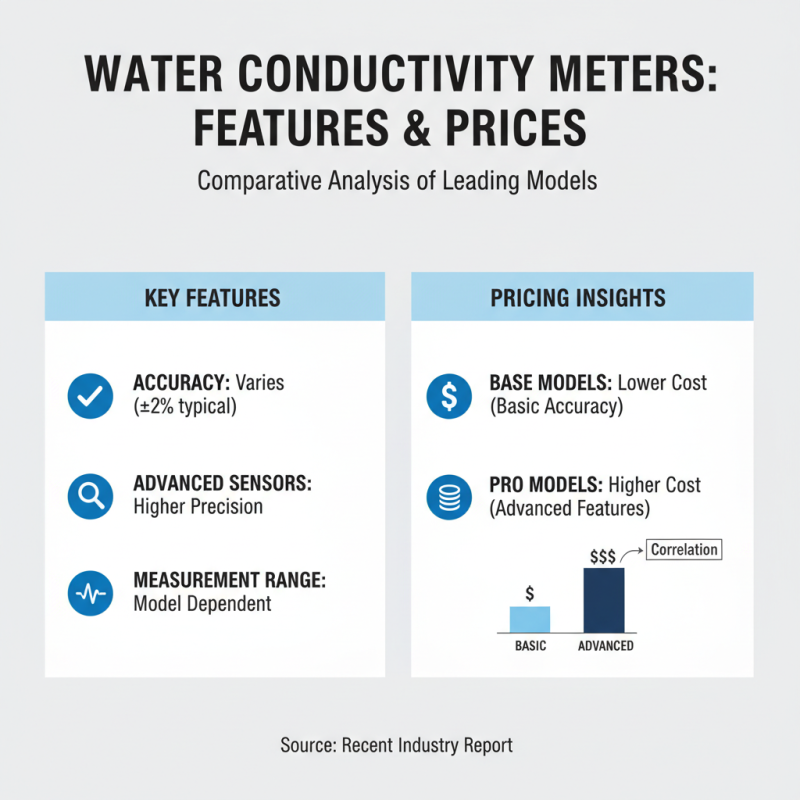
When selecting a water conductivity meter, understanding features and pricing is crucial for effective measurements. The market showcases a variety of models, each with different specifications. A recent industry report indicates that accuracy varies significantly, with some meters providing readings within ±2% of the actual conductivity. Models that employ advanced sensors generally offer better precision, but they may come at a higher price point.
Budget-conscious buyers often gravitate towards entry-level models, which can be appealing. However, the trade-off usually lies in their limited range and slower response times. Notably, research from the Water Quality Association reveals that 30% of water-related issues stem from inadequate monitoring tools. Investing in a high-quality conductivity meter may initially seem costly, yet it can save significant time and resources in the long run. Features like data logging and Bluetooth connectivity enhance usability and allow for better analysis.
With prices varying significantly, users need to weigh the features against their operational requirements. Some high-end models exceed $300, but important functionalities can also be found in the $100 to $150 range. It’s essential to compare not only the cost but also the reliability and accuracy provided. This careful evaluation can lead to a more informed decision, ensuring that the chosen meter meets both professional standards and personal expectations.
User Reviews and Recommendations for Top Conductivity Meters
When choosing a water conductivity meter, user reviews offer valuable insights. Many users emphasize accuracy as a critical factor. An accurate meter ensures reliable readings, especially for sensitive environments like laboratories or aquaculture. Some users report discrepancies with readings, indicating that not all models perform equally. This feedback can highlight the importance of calibrating devices regularly to maintain their precision.
Another common theme in user reviews is ease of use. A user-friendly interface can significantly improve measurement efficiency. Some users appreciate meters with clear displays and intuitive functionalities. However, a few users struggle with complicated settings and adjustability. It raises the question of how much technology should enhance user experience without overwhelming them.
Reliability is a recurring concern among users. Some meters are praised for their robust construction, suitable for diverse conditions. Yet, others emphasize the need for careful handling to avoid damage. The feedback illustrates that while robustness is important, users must remain cautious. The goal is always to find a balance between durability and usability for consistent performance.
Top 10 Water Conductivity Meters for Accurate Measurements
This chart displays the conductivity readings (in µS/cm) from the top 10 water conductivity meters. These meters are essential tools for accurately measuring the conductivity of water, which can indicate the presence of dissolved salts and other substances.