Top Tips for Choosing the Right Ultra Pure Water Purifier?
Choosing the right Ultra Pure Water Purifier can significantly impact your health. According to a report by the World Health Organization, around 2 billion people lack access to safely managed drinking water. Contaminated water can lead to serious health issues. Thus, selecting the ideal purifier is crucial.
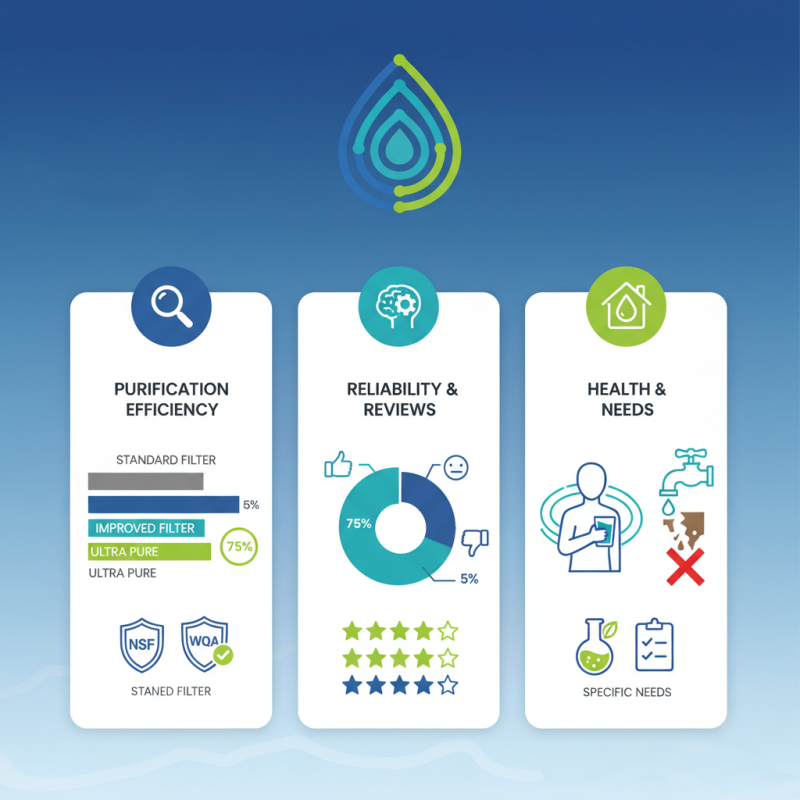
Consider performance data from industry studies. A 2021 survey revealed that 75% of consumers prioritize purification efficiency. An Ultra Pure Water Purifier should effectively remove impurities. Look for models with certifications from recognized organizations like NSF or WQA. Such endorsements enhance trust and reliability.
However, not all purifiers meet high standards. Some may fall short on performance or durability. Reflecting on customer reviews can provide insights. Ensure the purifier aligns with your specific needs. The right choice requires careful consideration of quality, effectiveness, and safety standards.
Understanding the Importance of Ultra Pure Water Purification
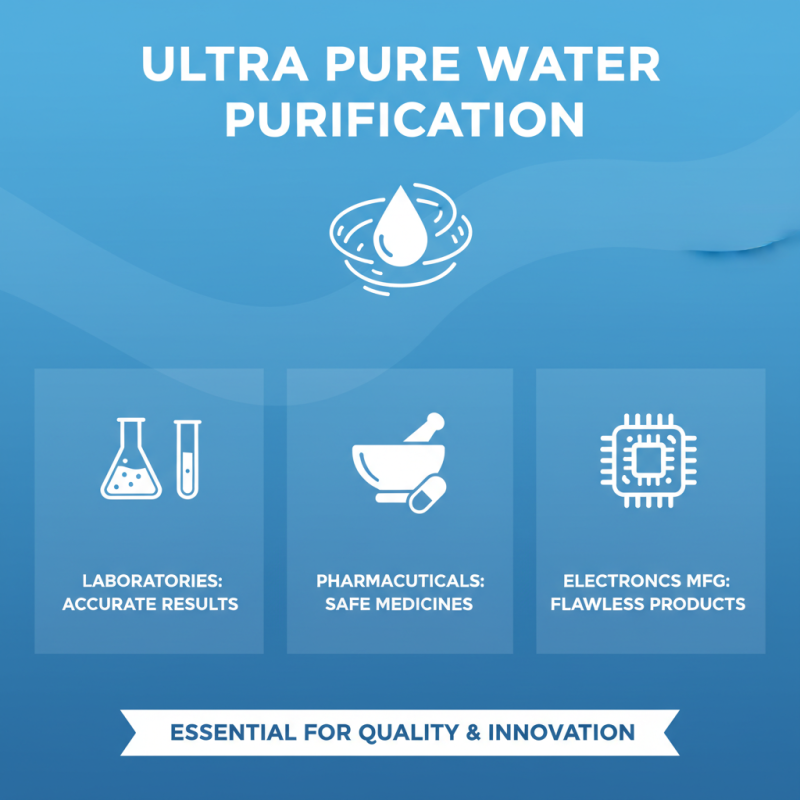
Ultra pure water is essential for several applications. It plays a crucial role in laboratories, pharmaceuticals, and electronics manufacturing. Understanding this importance is the first step in choosing the right purification system. Contaminated water can lead to inaccurate test results and defective products. Thus, selecting an effective water purifier becomes imperative.
When searching for an ultra pure water purifier, consider the purification technology used. Reverse osmosis, distillation, and deionization are among the most common methods. Each method has its strengths and weaknesses. For instance, reverse osmosis is effective for removing a wide range of impurities but may not eliminate all microorganisms. Be aware that no system is perfect; some contaminants may still slip through.
Look for certifications that indicate the purifier's reliability. Certifications from recognized organizations demonstrate compliance with safety and performance standards. Always check for user reviews and expert opinions to gain insights into the product's efficacy. Remember, your choice should reflect careful research and a clear understanding of your specific water needs.
Key Features to Look For in an Ultra Pure Water Purifier
When selecting the right ultra pure water purifier, several key features stand out. Look for systems that utilize advanced filtration technologies, such as reverse osmosis and activated carbon filters. Research shows that reverse osmosis can remove up to 99% of contaminants, including heavy metals and chlorine. This level of purification ensures your drinking water is clean and safe for consumption.
Another important factor is the purification capacity. Many high-quality purifiers can process several gallons of water daily, essential for families or busy households. According to the Water Quality Association, families of four should aim for at least 50 gallons of purified water per day. Compact designs also matter; some purifiers are designed to fit under the sink without sacrificing water quality or efficiency.
Monitoring features provide additional reliability. Systems with real-time monitoring can alert users when filter changes are necessary. Regular maintenance is crucial, yet not every user may stay consistent with it. Choose purifiers with easy-to-replace filters to reduce complexity. Ultimately, finding the right ultra pure water purifier involves balancing technology and practicality for reliable, quality water every day.
Different Types of Ultra Pure Water Purification Technologies
When selecting an ultra-pure water purifier, understanding the different types of purification technologies is crucial. Several technologies dominate this market, including reverse osmosis, distillation, and deionization. Each method offers unique advantages and drawbacks. For example, reverse osmosis effectively removes most contaminants but can waste water. On the other hand, distillation is reliable but energy-intensive.
Industry reports indicate that the reverse osmosis market is projected to grow at a CAGR of 10% through 2025. It’s essential to consider the specific needs of your water source. Testing your water can guide you to the right technology. A key insight is that not all purifiers remove every contaminant, so understanding your water's composition is vital.
Tips: Always check the certification of the purifier. Look for systems validated by a recognized authority. This ensures reliability and safety. Also, think about maintenance needs. Some systems require regular cartridge changes, which can add to long-term costs. Keep these aspects in mind to avoid future regrets and ensure you invest wisely in safe, ultra-pure water.
Top Tips for Choosing the Right Ultra Pure Water Purifier
| Purification Technology |
Efficiency |
Cost |
Maintenance Frequency |
Ideal Use |
| Reverse Osmosis |
98%+ Removal |
Medium |
6-12 months |
Home Use |
| Ultraviolet (UV) |
99.9% Disinfection |
Low |
12 months |
Waterborne Pathogen Control |
| Distillation |
99%+ Removal |
High |
6-12 months |
Laboratory and Medical Use |
| Activated Carbon |
70-90% Contaminant Removal |
Low |
3-6 months |
Improving Taste and Odor |
| Ceramic Filtration |
99%+ Bacteria Removal |
Medium |
12 months |
Travel and Emergency Use |
Evaluating Purification Capacity and Water Quality Performance
When choosing an ultra-pure water purifier, understanding purification capacity is crucial. Reports indicate that high-quality systems can remove up to 99.99% of contaminants. Regular assessments indicate that systems with reverse osmosis and advanced filtration technologies often perform better in urban areas. These methods effectively tackle substances like heavy metals and pathogens.
Water quality performance relies heavily on maintenance. Studies suggest that users can experience a decrease in efficiency as filters age. Users should regularly check the system's output to ensure it meets safety standards. Data shows that a significant percentage of systems do not meet expected quality benchmarks over time.
Experts recommend conducting regular water tests after installations. This can help identify any emerging issues quickly. Unexpected variations in taste or clarity may signal filtration problems. A clear understanding of purification capacity, along with testing and maintenance, can guide consumers toward better options.
Budget Considerations and Maintenance for Water Purifiers
When considering a water purifier, budget is a crucial factor. Determine how much you are willing to spend. Ultra pure water purifiers vary greatly in price. Some are quite affordable, while others can be a significant investment. Assess your needs before making a decision. For example, if you have a large family, a more expensive system may be worth it for the added benefits.
Maintenance is another vital aspect to consider. Regular upkeep ensures the purifier operates efficiently. Filters need to be replaced periodically. This can add to the overall cost over time. It is important to plan for these expenses. Invest in a system that clearly outlines its maintenance needs. Understanding these details will help avoid unexpected costs.
A key point often overlooked is how hard it can be to find the right balance between quality and affordability. Sometimes, cheaper options may not offer the desired purity levels. It’s easy to get drawn to lower price tags, but this can lead to frustration down the line. Take time to research and reflect on your choices. The right ultra pure water purifier will not only fit your budget but also meet your purity needs.