How to Choose the Best Water Quality Meter for Your Needs?
Choosing the right Water Quality Meter can significantly impact your water testing accuracy. Dr. Emily Chen, a renowned expert in environmental science, emphasizes that "the right instrument reflects the true quality of our water." This assertion highlights the importance of selecting a meter that meets specific needs.
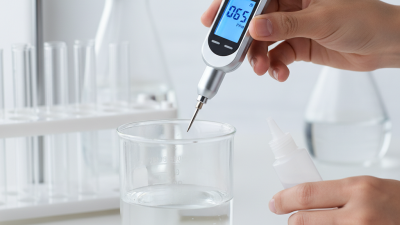
Water Quality Meters are essential tools for assessing various parameters. These include pH levels, turbidity, and dissolved oxygen. Inaccurate readings can lead to poor decisions regarding water safety. Different meters excel in different areas, making discernment crucial. Look for user-friendly designs and reliable technology that provides consistent results.
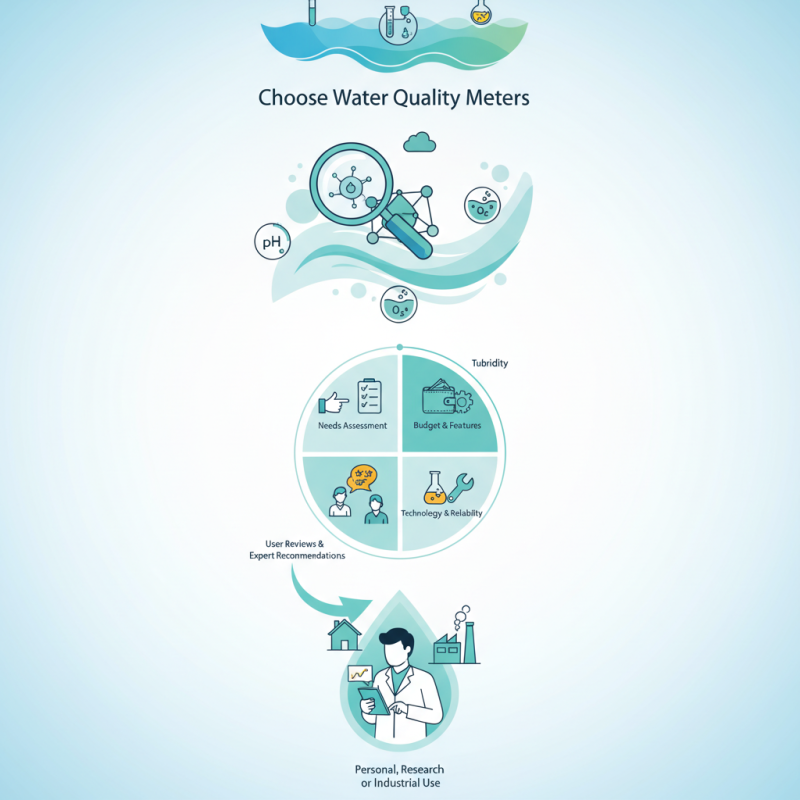
However, not all meters are created equal. Budget constraints and lack of knowledge can lead to subpar choices. Consider your unique requirements carefully. Whether for personal use, research, or industry, the ideal meter should be tailored to your specific tasks. Reflecting on user reviews and expert recommendations can guide your decision-making process effectively.
Understanding Different Types of Water Quality Meters
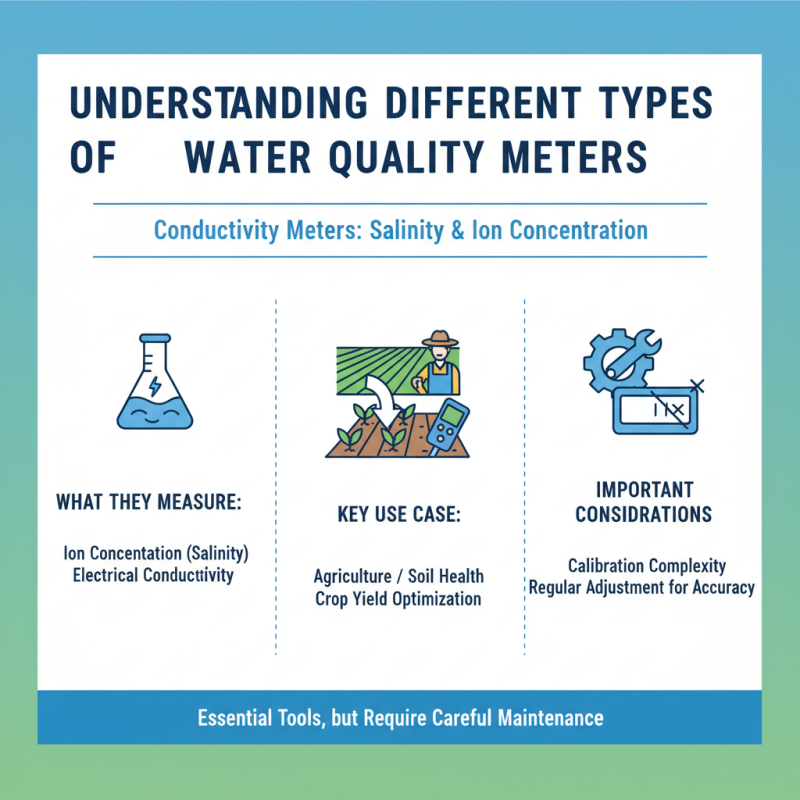
When selecting a water quality meter, understanding the different types available is crucial. Conductivity meters are popular for measuring the ion concentration in water, giving insight into salinity. They're essential in agricultural settings where soil salinity affects crop health. Many users rely on these meters, yet their calibration can be tricky, and errors may occur without regular adjustment.
Another type is pH meters, which assess acidity or alkalinity in water. These meters are vital for aquaculture and pool management. While easy to use, maintaining them is often overlooked. Regular cleaning and calibration are necessary to ensure accurate readings. Many users assume their devices are fine without checking regularly, which can lead to flawed data.
Turbidity meters, on the other hand, provide insights into water clarity. This measurement is essential in environments where sediment affects aquatic life. However, users might not fully understand how factors like lighting can influence results. Each type of meter serves a distinct purpose. Yet, users need to weigh their specific water quality needs against these functionalities.
Key Features to Consider When Selecting a Water Quality Meter
When selecting a water quality meter, focus on several key features. Accuracy is paramount. A reliable meter should provide precise readings of important parameters like pH, turbidity, and dissolved solids. According to a recent industry report, 85% of users prioritize accuracy over other features. Ensure the meter you choose supports frequent calibration, which maintains measurement reliability.
Ease of use also matters. Complex interfaces can lead to errors. A simple display is preferable. Look for meters with automatic temperature compensation features. These allow for more accurate readings across varying conditions. Simplicity enhances user experience, reducing the learning curve.
Portability is a significant consideration. For field tests, a lightweight and durable meter is crucial. Many users report difficulties with bulky devices. An ideal meter should be compact and waterproof. In fact, data shows that portable meters are preferred by 70% of professionals in environmental monitoring. Make sure it meets your specific needs and is easy to carry.
Evaluating the Accuracy and Calibration of Water Quality Meters
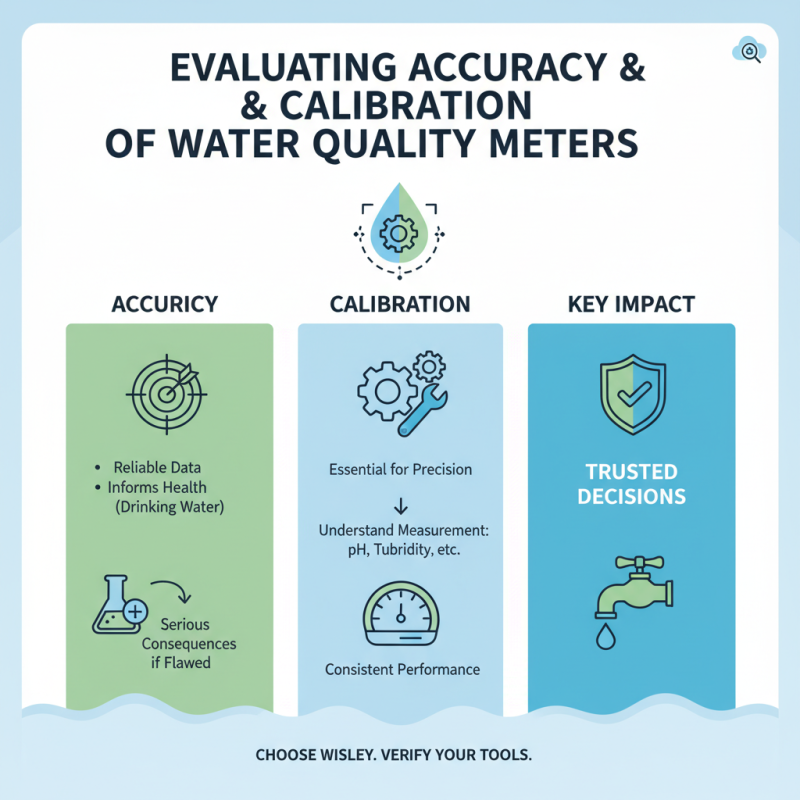
When selecting a water quality meter, accuracy and calibration are essential. An accurate meter provides reliable data. This data can impact health, especially in drinking water applications. Without reliable instruments, decisions based on flawed information could lead to serious consequences. Ensure you understand how the meter you choose measures various parameters, like pH and turbidity.
Calibration is a critical step in maintaining accuracy. Many meters drift over time, losing their precision. Regular calibration ensures measurements remain trustworthy. Some meters come with built-in calibration features, while others require manual adjustments. Users should be prepared to conduct this process, ensuring a deep understanding of their selected device.
It's important to consider environmental factors that may affect readings. Temperature shifts and contaminants might introduce variability. A water quality meter should be checked periodically. Users may find discrepancies in results, prompting a need for recalibration. These reflections can help reinforce the importance of consistent monitoring and maintenance.
Assessing Your Specific Water Testing Needs and Applications
Choosing the right water quality meter begins with understanding your specific needs. Different applications require different measurements. For instance, aquaculture demands precise pH and dissolved oxygen readings. According to the Water Quality Association, regular monitoring can prevent fish stress and disease, leading to better yields.
Consider your testing environment. Are you in a lab, a field, or a home setting? Each environment brings unique challenges. For example, field testing might necessitate a portable device with robust features. Data from the EPA highlights that 90% of water quality issues arise from inadequate monitoring practices. Thus, a reliable meter can be pivotal.
Think about the parameters you need to measure. Common aspects include turbidity, conductivity, and alkalinity. However, focusing on just one parameter can lead to oversight. For instance, evaluating just pH might ignore important compounds affecting water quality. The need for holistic measurements cannot be understated.
Budgeting for Your Water Quality Meter: Cost vs. Value
Choosing the right water quality meter is crucial. As you budget for this purchase, consider cost and value. Higher-priced models often offer advanced features. But, they may not always be necessary for your needs. Understand your specific requirements before making a decision.
It's essential to evaluate what you're measuring. Are you testing drinking water or assessing a pond? The answer impacts the type of meter you need. A cheaper device might suffice for household use. But investing in a more reliable unit could save you money on repeat tests. Reliability often outweighs initial cost.
Reflect on the potential trade-offs. A low-cost meter may lack accuracy. Frequent inaccuracies can lead to poor decisions about water safety. Conversely, purchasing a premium model without understanding your needs can waste resources. Finding balance is key. Know your priorities to make an informed choice.
Water Quality Meter Cost vs. Value
This chart compares the cost and value of water quality meters at different price points. The bars represent the cost in dollars, while the orange line indicates the perceived value based on customer ratings.