Why Choose a Lab Conductivity Meter for Accurate Measurements?
In the realm of laboratory measurements, precision is paramount. Industry expert Dr. Emily Carter emphasizes, “Relying on a Lab Conductivity Meter ensures that testing is both accurate and reproducible.” This testament highlights the critical role these devices play in various fields, from environmental monitoring to food safety testing.
Lab Conductivity Meters provide vital insights into the conductivity of liquids, reflecting their ionic content. Such measurements are not merely numbers; they can dictate the quality of a product or the safety of a water source. The precision offered by these meters can mean the difference between compliant results and critical failures. Even minor inaccuracies can lead to significant discrepancies.
In a world where quality assurance is non-negotiable, a Lab Conductivity Meter stands out. However, it is crucial to recognize that even the best devices require proper calibration and maintenance. Users must remain vigilant about their techniques. A reliability focused mindset will ultimately lead to better outcomes and enhanced data integrity.
Benefits of Using Lab Conductivity Meters for Precise Measurements
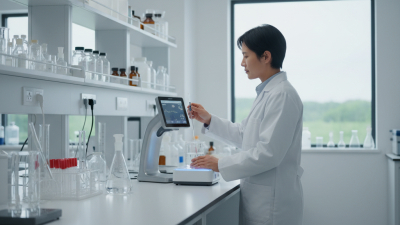
Laboratories often require precise measurements of conductivity for various applications.
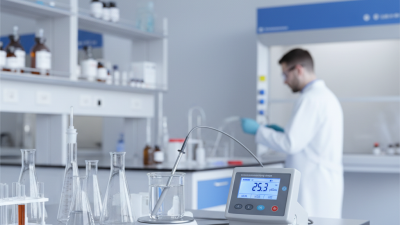
A lab conductivity meter is essential for obtaining accurate data. It allows researchers to monitor the ionic content in solutions, which is crucial in fields like water quality testing and material science.
Using reliable instruments ensures that results are consistent and trustworthy.
Conductivity meters provide numerous advantages. They can quickly evaluate solution properties, leading to faster experimental setups. An accurate reading can prevent costly mistakes in research. Many users find that a lab conductivity meter reduces the variability in measurements, increasing confidence in data.
This consistency is vital for reproducibility in scientific experiments.
Tips: Regularly calibrate your conductivity meter for optimal performance. Be vigilant about the cleanliness of the probes to avoid cross-contamination. Remember, though, not every measurement will be perfect. Variations can occur due to environmental factors like temperature. Accepting and understanding these limitations can enhance your overall research quality.
Comparing Laboratory and Field Conductivity Measurements
When it comes to measuring conductivity, laboratory and field methods offer distinct advantages and drawbacks. Laboratory conductivity meters provide a controlled environment. This ensures higher precision in measurements. They are calibrated to account for temperature fluctuations. These meters can also handle various sample types with ease. However, they might not reflect real-world conditions.
Field conductivity measurements, on the other hand, offer immediate data collection. They allow for direct analysis in environments where samples are gathered. This can lead to quick decision-making. Yet, field conditions can introduce variability. Factors such as temperature and impurities often affect readings. Those who rely on field measurements must approach results with caution. It is essential to compare field data with laboratory benchmarks for accuracy.
In conclusion, both methods have merit. Choosing the right one depends on the specific needs of the research. Understanding the limitations of each is critical. This knowledge enhances the reliability of the findings. It is important to critically assess where and how measurements are taken. Practice and awareness can lead to better decision-making in various fields.
Understanding the Principles of Conductivity Measurement
Conductivity measurement is essential in various fields, including chemistry and environmental science. This process assesses how well a solution can conduct electricity. The principle behind conductivity relies on the movement of ions within a solution. These ions carry an electric charge, which influences the overall conductivity level. Accurate measurements require precision tools, such as lab conductivity meters.
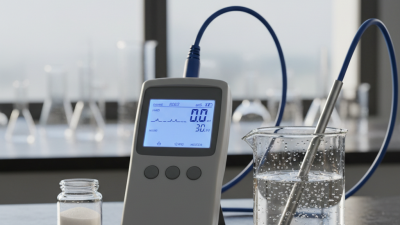
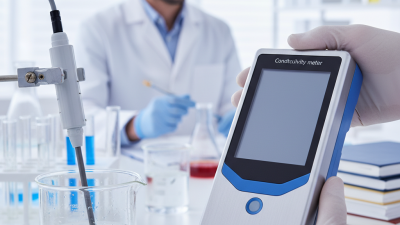
Lab conductivity meters operate based on a simple yet effective principle. They use electrodes to measure the current flow between them in a solution. The meter interprets this data to provide a conductivity value. Not all meters provide the same accuracy, and it is crucial to understand their limitations. Factors such as temperature and sample impurities can skew results. Reflecting on these variables underscores the importance of regular calibration and reliable equipment.
Training on proper usage is also a key factor. Users should be familiar with the device's specifications and potential errors. Awareness of common pitfalls helps minimize inaccuracies. A well-informed operator can make precise adjustments, leading to more trustworthy data. High-quality conductivity meters are an investment. Yet, understanding their underlying principles is what makes them valuable tools for achieving accurate measurements.
Factors Influencing Conductivity Meter Accuracy and Reliability
Choosing a lab conductivity meter hinges on understanding the factors affecting accuracy and reliability. The precision of measurements relies heavily on calibration protocols. A poorly calibrated meter may result in significant errors, sometimes exceeding 5% of the actual conductivity value. Proper calibration should be done regularly under controlled conditions to ensure consistent performance.
Temperature influences conductivity readings, as most materials exhibit varying conductivity levels at different temperatures. Many professionals recommend conducting tests at a standardized temperature, often 25°C, to achieve reliable data. Results can vary significantly, sometimes by as much as 10%, if temperature fluctuations are not accounted for.
Electrode maintenance is another critical aspect. Dirty or damaged electrodes can cause erroneous readings. Regular cleaning and inspections can prevent inaccuracies. Reports indicate that electrode fouling leads to errors in 15-20% of cases. Users must also consider the environment in which measurements are taken. High levels of interference from other ions can skew results, calling for more sophisticated sensors to provide accurate data. Achieving reliable measurements calls for a commitment to these aspects.
Applications of Conductivity Meters in Various Industries
In numerous industries, conductivity meters play an essential role in ensuring process accuracy and product quality. For instance, in the pharmaceutical sector, maintaining water purity is critical. A study found that over 75% of pharmaceutical companies utilize conductivity meters to monitor water quality. This helps in confirming that the water meets stringent regulatory standards.
In the food and beverage industry, conductivity measurements are pivotal. They assist in monitoring the concentration of salts or sugars in solutions. According to research, 65% of food manufacturers employ these meters to ensure consistency in their products. By accurately measuring conductivity, they can better control the production process, leading to enhanced flavor and quality.
Moreover, industrial wastewater treatment facilities rely heavily on conductivity meters. Effective monitoring can reduce costs by up to 30%. They help operators determine the salinity and overall ionic concentration in waste streams. However, challenges remain. Different environments can yield varying results, and calibration must be routinely checked to ensure accuracy. The path to precision is not without obstacles, and continuous improvement is essential.
Why Choose a Lab Conductivity Meter for Accurate Measurements?
| Industry |
Typical Conductivity Range (µS/cm) |
Application |
Recommended Meter Features |
| Water Treatment |
50 - 2000 |
Monitoring water quality |
High accuracy, data logging |
| Food and Beverage |
100 - 5000 |
Quality control in production |
Robust, portable |
| Pharmaceutical |
1 - 2000 |
Purity testing of substances |
Calibration capabilities, user-friendly |
| Environmental Monitoring |
10 - 50000 |
Assessing pollution levels |
Durable, waterproof |
| Agriculture |
500 - 15000 |
Soil and nutrient management |
Field-ready, easy to use |