How to Choose the Best Digital Conductivity Meter for Your Testing Needs
In the realm of scientific testing and analysis, the importance of choosing the right tools cannot be overstated. According to Dr. Emily Harrison, a leading expert in analytical instrumentation, "Selecting the appropriate Digital Conductivity Meter is crucial for obtaining reliable data in various applications." This statement underscores the significance of understanding the specific requirements of your testing needs when contemplating the purchase of a digital conductivity meter.
Digital conductivity meters are essential instruments for measuring the conductive properties of liquids, providing vital information for industries ranging from environmental monitoring to food and beverage production. Each application demands precise readings and reliable performance, making the selection process critical. Whether you are a seasoned professional or a novice, it is imperative to consider factors such as measurement range, accuracy, and user interface when choosing a Digital Conductivity Meter. By doing so, you will ensure that your meter not only meets current testing demands but also adapts to future challenges in an evolving scientific landscape.

Understanding Digital Conductivity Meters and Their Applications
Digital conductivity meters play a crucial role in a variety of industries, including agriculture, water treatment, and food production, where monitoring the conductivity of solutions is essential for quality control and compliance with industry standards. These instruments measure the ability of a solution to conduct electrical current, providing insight into the ionic content of the sample. According to a recent market analysis, the global conductivity meters market is projected to grow significantly, reaching USD 500 million by 2027, driven by advancements in technology and the increasing focus on water quality assessments.
The applications of digital conductivity meters are vast. In agricultural settings, they are used to assess soil salinity and nutrient levels, which are vital for optimizing crop yields. In the water treatment industry, these meters ensure the safety and effectiveness of treatment processes by measuring total dissolved solids (TDS), a key indicator of water quality. Additionally, food and beverage manufacturers rely on conductivity measurements to maintain the proper balance of ingredients and ensure product consistency. As industries increasingly prioritize sustainability and efficiency, the demand for precise and reliable conductivity meters is expected to rise, underscoring their importance in critical testing scenarios.
Comparison of Different Types of Digital Conductivity Meters
This bar chart showcases the price comparison of different types of digital conductivity meters including portable, benchtop, inline, and pocket meters. These variations cater to different testing needs and budgets.
Key Features to Consider When Selecting a Conductivity Meter
When selecting a digital conductivity meter, several key features should be taken into account to ensure optimal testing outcomes. One of the most critical aspects to consider is the accuracy and range of the meter. According to industry standards, a high-quality conductivity meter should have an accuracy rate of at least ±0.5% of full scale, which is essential for applications in water quality testing and environmental monitoring. Typically, meters with a broader measurement range allow for greater versatility, with many models capable of measuring conductivities from 0.001 mS/cm to over 200 mS/cm, accommodating various testing needs across different environments.
Another important feature to consider is the calibration process of the meter. Many digital conductivity meters offer automatic temperature compensation (ATC), which is crucial for obtaining precise readings, especially in fluctuating temperatures common in field testing. Furthermore, the ease of calibration affects the usability and reliability of the device; models that can be calibrated with standard solutions ensure consistency and can significantly reduce the risk of measurement errors. Features such as data logging capabilities, user-friendly interfaces, and robust construction are also valuable, particularly for professionals who require reliable instruments for long-term use in challenging conditions. Together, these attributes contribute to the overall performance and adaptability of a digital conductivity meter in fulfilling diverse testing requirements.
Comparing Different Types of Conductivity Meters and Their Uses
When selecting a digital conductivity meter, understanding the various types available and their specific applications is crucial. There are primarily three main categories of conductivity meters: portable, bench, and in-line meters. Portable conductivity meters are designed for field use, providing convenience and easy handling for on-site testing in various environments, such as soil or water bodies. They are typically battery-operated and often waterproof, making them suitable for outdoor applications. Bench conductivity meters, on the other hand, are ideal for laboratory settings where greater accuracy and precision are required. These meters usually come with advanced features, such as temperature compensation and calibration options, allowing for more detailed analysis.
In-line conductivity meters are designed for continuous monitoring and are often integrated into processes like wastewater treatment or industrial applications. These meters provide real-time data and can be connected to systems for automatic adjustments based on conductivity readings. Their ability to maintain constant testing without manual intervention makes them essential for maintaining optimal conditions in various operational settings. By understanding the differences between these types of conductivity meters, users can make informed decisions based on their specific testing needs, ensuring they choose the right tool for accurate and efficient conductivity measurements.
Factors Affecting the Accuracy and Reliability of Conductivity Measurements
When choosing a digital conductivity meter, it's essential to consider the factors that influence the accuracy and reliability of conductivity measurements. One of the most critical aspects is the calibration of the meter. Regular calibration against standard solutions ensures that the device provides consistent readings. Drift in calibration can occur over time, which may lead to erroneous results, especially in precise applications. It's advisable to choose a meter that allows for easy recalibration and has a clear calibration protocol outlined in its user instructions.
Another significant factor is the temperature compensation capability of the device. Conductivity readings can vary with temperature, so having an automatic temperature compensation (ATC) feature greatly enhances accuracy. Meters that do not account for temperature changes may yield misleading data, particularly in environments where temperature fluctuates frequently. Additionally, the design of the sensor plays a role in measurement reliability. Consider meters equipped with robust electrodes that are resistant to fouling and degradation, as these features help maintain reliable performance in different testing conditions.
How to Choose the Best Digital Conductivity Meter for Your Testing Needs
| Factor |
Description |
Impact on Accuracy (%) |
Recommended Range |
| Temperature Compensation |
Allows the meter to adjust readings based on temperature changes. |
±2% |
0°C - 50°C |
| Electrode Quality |
The type and condition of the electrode can greatly affect measurements. |
±5% |
Clean and calibrated electrodes |
| Calibration Method |
Frequency and quality of calibration affect the reliability of readings. |
±3% |
Monthly calibration recommended |
| Measurement Range |
Ensure the meter can accurately measure within the required range. |
±2% |
0 - 200 mS/cm |
| Sample Matrix |
Different materials can impact conductivity readings differently. |
±4% |
Appropriate sample preparation |
Budget Considerations: Finding a Balance Between Quality and Cost
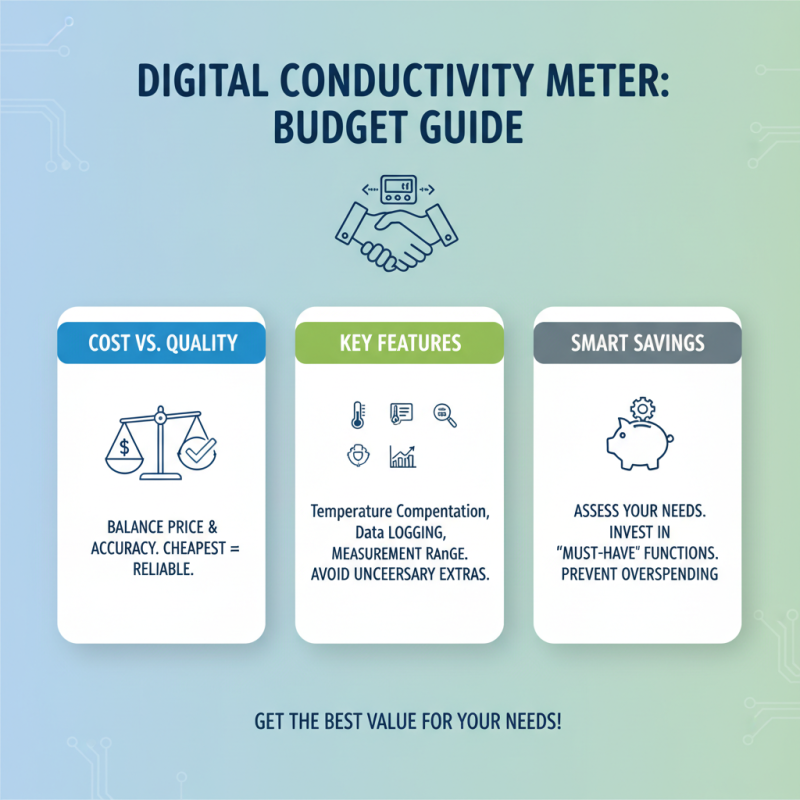
When choosing a digital conductivity meter, budget considerations play a crucial role in ensuring you get the best value for your needs. Conductivity meters vary widely in price, and it's essential to find a balance between quality and cost. While it can be tempting to opt for the cheapest option available, doing so may lead to compromised accuracy and reliability. Look for meters that provide a good range of features, including temperature compensation and data logging, without breaking the bank. It’s important to assess what features are truly necessary for your testing applications to prevent overspending on unnecessary functionalities.
Furthermore, consider the long-term investment aspect of purchasing a conductivity meter. A more expensive model might initially strain your budget but could offer greater durability and more precise measurements over time, ultimately saving you money on repeated replacements or recalibrations. Also, take into account the cost of additional accessories, such as calibration solutions and maintenance tools. By conducting thorough research, comparing options, and identifying your specific testing requirements, you can make an informed decision that aligns your financial constraints with the performance expectations necessary for your work.