2026 Top Lab Water Purification System Buying Guide
Choosing a Lab Water Purification System in 2026 is not simply a matter of comparing prices or polishing claims. It is a decision about experimental control, staff safety, operating cost, and data credibility. A flask may look spotless, yet trace ions, organic residues, particles, or microbial growth can quietly distort sensitive work.
Dr. W. Edwards Deming, a widely respected quality expert, said, “Without data, you’re just another person with an opinion.” His principle remains practical for laboratory water purchasing. Buyers should examine resistivity, total organic carbon, endotoxin control, microbial monitoring, flow rate, storage design, and validation records. The right specification depends on the application. Cell culture, chromatography, molecular biology, analytical chemistry, and routine glassware washing do not need identical water quality.
This guide examines those differences through a buyer’s lens. It considers feed-water variability, purification stages, filter replacement, alarm functions, installation limits, and service response. A system installed beside a busy bench must be easy to read, maintain, and sanitize. Small details matter, including dead-leg prevention, point-of-use filters, and clear usage logs.
No buying guide can remove every uncertainty. That is worth admitting. Laboratory teams sometimes select impressive specifications they never verify. Others underestimate maintenance because the first-year quote looks attractive. Careful comparison is slower, but usually cheaper than unexplained failed experiments. The most reliable choice is the system that matches real workflows, documented standards, and measurable water quality.
Understanding Laboratory Water Purity Grades and Application Requirements
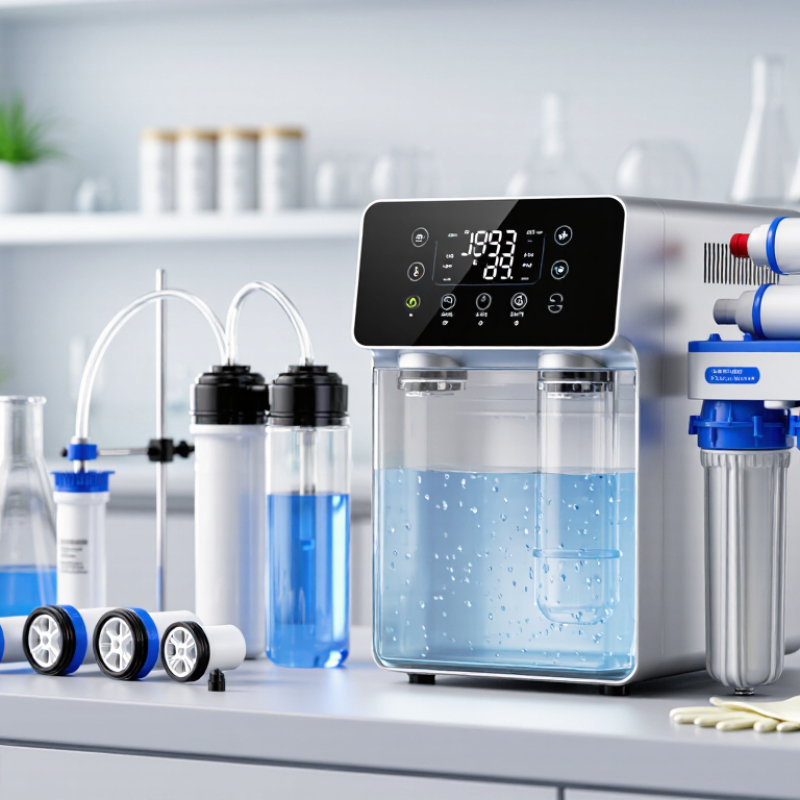
Choosing a laboratory water purification system in 2026 starts with the purity grade, not the equipment list. In practice, Type III water suits glassware rinsing, water baths, and routine preparation. Type II water supports buffers, microbiology media, and many analytical workflows. Type I water is reserved for sensitive methods, including trace analysis, molecular biology, and final instrument rinsing. It is not automatically better for every task.
Under ASTM D1193 guidance, laboratories should review resistivity, total organic carbon, microbial levels, particles, and endotoxins where relevant. Type I water commonly approaches 18.2 MΩ·cm at 25°C, but resistivity alone proves little. A polished display can hide a neglected filter or contaminated storage tank. Check feed-water quality, daily volume, peak demand, and point-of-use filtration. Also verify whether the system records alarms and maintenance history. Choose by risk.
Application requirements should drive the purchase.
A cell culture room may need low-endotoxin water, while a chemistry bench may prioritize stable TOC and consistent flow. Experienced technicians should test water at the actual outlet, not only inside the purifier. Small errors matter. Lab teams sometimes select ultrapure specifications, then waste capacity on ordinary washing. That decision deserves reconsideration. Confirm validation plans, consumable availability, operator training, and independent quality checks before approval.
Comparing Lab Water Purification Technologies and System Configurations
2026 Top Lab Water Purification System Buying Guide
Comparing Lab Water Purification Technologies and System Configurations
A practical comparison begins with your experiments, not the equipment cabinet. Reverse osmosis removes dissolved salts, particles, and many organic contaminants at moderate cost. Deionization produces low-conductivity water, but resin performance declines when feed water changes. Ultraviolet treatment reduces microbial activity and organic traces. Ultrafiltration helps remove endotoxins and particles. Distillation remains dependable, but it usually needs more energy, space, and maintenance.
System configuration matters just as much. A central system can supply several benches through a distribution loop. This arrangement saves duplicated equipment, yet stagnant sections may create microbial risks. Point-of-use units provide fresher water beside sensitive instruments. Modular systems allow staged upgrades, such as adding polishing, UV, or ultrafiltration later. A common planning mistake is choosing Type I water for every task. Routine glassware washing may only require Type III water.
Tips: Test feed water before selecting technology. Check conductivity, resistivity, total organic carbon, and microbial levels at the dispenser. Match purity grades with validated methods and instrument requirements. Keep tubing runs short. Record filter changes and sanitation dates. Do not rely on a single reading; trends reveal declining performance earlier. Budget for consumables, service access, drainage, and electricity. The cheapest purchase can become expensive. Reconsider the design after a trial period.
2026 Top Lab Water Purification System Buying Guide
Comparing Lab Water Purification Technologies and System Configurations
Reverse osmosis is commonly used as a pretreatment stage, while Type III water is suitable for general laboratory preparation and washing. Type II water supports routine analytical work, buffers, and microbiology. Type I ultrapure water provides the highest ionic purity and is typically used for trace analysis, molecular biology, and instrumental applications. Resistivity values are representative benchmarks at 25°C; actual performance depends on feed-water quality, treatment stages, maintenance, and system configuration.
Evaluating Key Performance Specifications for 2026 Laboratory Systems
2026 Top Lab Water Purification System Buying Guide
Evaluating Key Performance Specifications for 2026 Laboratory Systems
In 2026, laboratory water systems should be judged by measured performance, not attractive screens. Start with the water grades required for each procedure. Type 1 water may support trace analysis, while Type 2 water often suits routine buffer preparation. Confirm the applicable standard and test method before comparing equipment.
Monitor resistivity, total organic carbon, microbial counts, and particle control. A reading near 18.2 megohm-centimeters indicates high ionic purity at controlled temperature. It does not prove low organic contamination. Ask for calibration records, detection limits, and recent certificates. Small numbers matter.
Flow rate also deserves practical testing. A system delivering 1.5 liters per minute may seem adequate, yet a busy laboratory can empty its reservoir quickly. Check recovery time after a five-liter draw. Review tank volume, filtration stages, alarm response, and replacement intervals. A quiet pump is useful. A stable one is better.
Installation conditions can change results. Document feed-water hardness, pressure, temperature, and seasonal variation. Sanitization should be simple, traceable, and compatible with laboratory schedules. Remote monitoring may improve oversight, but network access creates another maintenance task. I have seen specifications look impressive while daily use exposed awkward sampling points. Request a hands-on demonstration, and record readings over several operating days.
Assessing Installation, Maintenance, Safety, and Operating Costs
When buying a lab water purification system in 2026, assess daily workflow before comparing specifications. A unit beside the analytical bench may save steps, but it can crowd service access. Measure doorway width, drain height, electrical capacity, and wall clearance. Installation often fails at small details, such as an unsuitable feed-water connection. Request commissioning records, water-quality readings, and staff training. These documents support reliable operation and future troubleshooting. Do not assume the lowest purchase price is the lowest cost.
Tips: Keep a simple cost sheet. Include filters, sanitizers, electricity, testing, labor, and planned downtime. Check replacement intervals against actual water use. My own first estimate might miss emergency servicing, so leave a reasonable contingency. Perfect forecasting is impossible.
Maintenance records should show conductivity or resistivity trends, filter changes, disinfection dates, and alarm checks. Safety depends on clear labeling, dry electrical areas, secure tubing, and accessible shutoff points. Staff should know what an alarm means before starting sensitive work. Operating costs also rise when users discard water during long flushing cycles. A timed routine can reduce waste, but it must not compromise purity. Review the system quarterly, and question any result that seems unusually convenient.
Selecting the Best Laboratory Water Purification System for Your Facility
Selecting the Best Laboratory Water Purification System for Your Facility
Choosing a laboratory water purification system starts with your actual testing needs. Type I water supports trace analysis, molecular biology, and sensitive instrument work. Type II water suits buffers, media preparation, and general chemistry. Type III water often serves glassware washing and initial rinsing. Buying the highest grade for every task may waste energy, filters, and operating funds.
Check your feed water before comparing equipment. Municipal water can vary by season, building age, and local treatment conditions. Ask for a recent water analysis, including hardness, chlorine, silica, and microbial indicators. A system with pretreatment may protect membranes and extend cartridge life. It should also provide clear readings for resistivity, total organic carbon, temperature, and filter status. Small displays are easy to ignore.
Daily workflow matters as much as specifications. Measure the distance between the system and the main workbench. Confirm the dispensing rate during busy periods. A slow outlet can delay several users and encourage unsafe container handling. Look for simple sanitization steps, documented maintenance intervals, and accessible replacement parts. Staff should understand alarms without guessing. Training is often underestimated. It should not be. A perfect system on paper may perform poorly when users skip cleaning or replace filters late. Keep a usage log for the first month, then question whether the selected capacity matches real demand.